Bimco, the world’s largest international shipping association, is forecasting that the shipping slowdown in 2015 is likely to continue into 2016.
“2015 never really took off,” it said, “even though the global economic activity looked stronger earlier in the year. The negative indicators seen at the end of 2014 were not overcome, and we saw a significantly lower level of growth for global GDP in 2015 than in the previous five years. This was primarily due to the struggling emerging markets and developing economies, led by changes in China’s economic focus.”
And, as Bimco’s hope for a bounce-back in 2016 wanes, shipping should brace itself for yet another challenging year, it added.
The dry bulk market experienced a troublesome 2015 as the ongoing decline in Chinese coal imports was not countered by any significant upswing elsewhere. Whereas iron ore imports were on a par with 2014, steel export from China reached a new high, benefitting mid-sized ships. For 2016, much depends on what Chinese steel mills will do. Will they continue production above domestic consumption – or substitute domestically mined ore with imported ore? The jury is still out.
Both the crude oil tanker and oil product tanker markets enjoyed an extraordinarily strong freight market throughout 2015; ignited by the drop in oil prices that began in mid-2014 and supported by a relatively low supply-side growth in 2015. It was the best year for all oil tankers since the market crashed in late 2008.
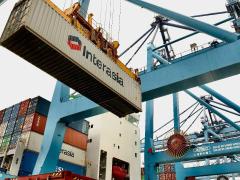
Disappointing European demand for containerised goods versus the strong growth of imports into the US slowed the demand for container ships significantly. At the same time, 900 000 TEU worth of ultra large container ship capacity was delivered. Overall, the market imbalance worsened as the supply-side rose to a four-year high (8.0% in 2015) while the demand-side growth rate hit a three-year low. The lack of head haul volume growth on the Asia to Europe trading lane was particularly worrisome as it accelerated the heavy cascade of ships clogging up other parts of the network.
The revival of time charter rates in the first part of the year was not based on a strong improvement in the fundamental market balance, and both spot and time charter rates dropped as the year passed. Going forward, what is needed to revive European imports of containerised goods is for the Euro to strengthen against the Renminbi and for retailers to begin restocking again.