There are distinct signs that
things are looking up in
the shipping industry, with
cargo volumes (particularly
from the east) picking up, a
capacity shortage and rising
rates all being recorded in
trades around the world.
Financial data from
Standard Bank shows trade
remained robust into the
second quarter, following a
spurt in China’s economic
growth seen in the first three
months of the year.
Hapag Lloyd CE, Rolf
Habben Jansen, said that he
was “cautiously optimistic”
about the outlook for the rest
of the year due to the gap
between supply and demand
closing.
And APM-Maersk Line’s
Q1 results confirm the
upward trend that others
have also noted. “Industry
fundamentals are improving,”
said the report.
“Market fundamentals
continued to improve in
Q1 and demand outgrew
nominal supply for the second
consecutive quarter,” it
added. “Transported volumes
increased by 10%, partly
because of improved demand.
“Both spot freight rates
and contract rates increased
significantly during the
quarter, lately also on the
North-South trades.”
Indeed, the only adverse
factor at the moment is the
increasing bunker prices.
Hapag’s Jansen, for
example, warned that higher
bunker costs in Q1 were
expected to have an impact
on freight rates for the rest of
the year.
A similar sentiment was
expressed by Maersk. While
freight rates had increased by
4.4%, this, the report said, did
not fully compensate for the
80% increase in bunker price.
“Despite increasing freight
rates, Maersk Line experienced
a decrease of US$112 million,
primarily due to higher bunker
costs.”
But, despite this, Maersk is
quite confident that market
conditions are on the mend.
“Due to gradual improvements
in container rates Maersk
Line continues to expect an
improvement in excess of
US$1 billion in underlying
profit compared to 2016
(loss of US$384m). Global
demand for seaborne container
transportation is still expected
to increase 2-4%.”
And conditions on the SA
trades are definitely brighter,
according to Glenn Delve,
marketing director of MSC.
“For a couple of months
now,” he told FTW, “there has
been a shortage of equipment
and capacity, particularly on
the Asia trade.”
This he attributed mainly
to congestion at the main
Chinese ports, mostly a result
of the three new alliances and
their scheduled operations
all coming on stream at the
beginning of April.
Also, increasing demand for
raw materials in Asia has also
seen a “big uptick” in mineral
exports from SA, Delve added.
“We have seen import rates
firming up quite dramatically,”
he said, “and even export rates
have firmed up.”
And, on the global front,
Delve stressed that there
had also been a firming of
rates. “More cargo, along
with ongoing merger and
acquisition (M&A) activity. So
there is not as much capacity
as there was out there.”
Another marketing
executive from a foreign line’s
agency in SA agreed with
Delve.
“Space is tight at the
moment,” he said. “And all
the carriers are using this to
push the rates up, maybe not
to where they should be, but
the best they can currently
achieve.”
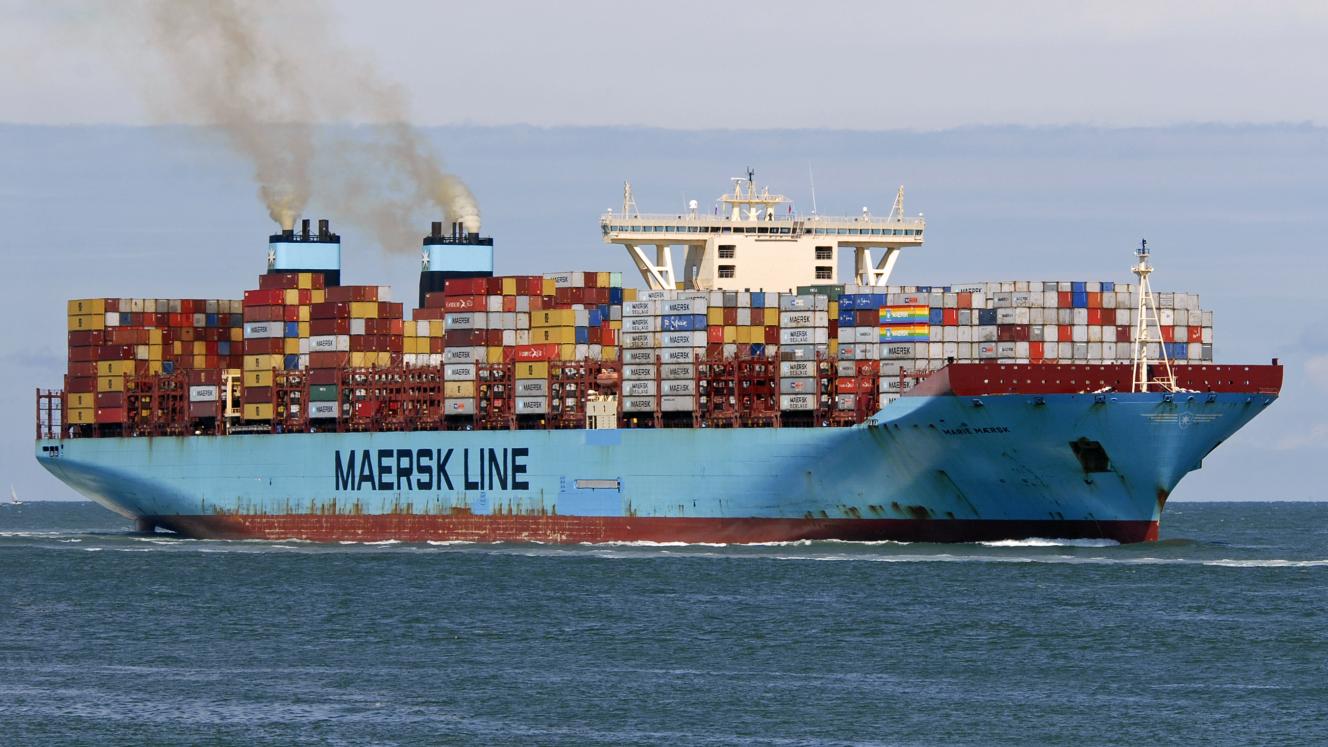
CAPTION
Maersk confident that market conditions are on the mend.
Shipping rates on the rise?
Comments | 0
© Now Media. This content is protected by copyright and may not be adapted or republished. If you would like to discuss cooperation opportunities, please contact: editor@freightnews.co.za.