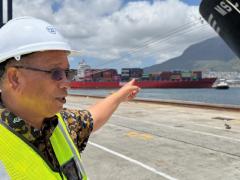
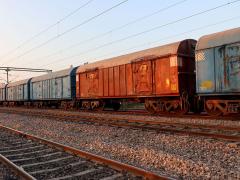
South Africa’s expensive and inefficient port and rail system is playing into the hands of its neighbours who are successfully wooing customers with more attractive value propositions. It’s a trend that several analysts have noted, and the reality on the ground supports their contention. “Our ports, railways and customs delays are such a headache for people moving RIT (removal in transit) cargo through this country to SADC countries that several prefer going to Beira,” Warren Jayes of Leo Shipping Services told FTW last week. And the issue is not just the loss of business for the Port of Durban – but for every service provider along the food chain, and that includes clearing and forwarding agents, transporters and warehouse operators. “A number of agricultural product exporters out of Zimbabwe and Zambia are choosing to ship through Beira because of the delays and uncertainty in Durban.” And while ocean freight rates from Beira may be a lot more expensive than Durban, shippers are looking at the whole package – and growing volume moving through Beira is evidence that Durban is no longer the dominantly preferred option. On the one hand there are not as many sailings to and from Beira, and there are long dwell times outside the port, but the inland leg to get to Beira is a lot cheaper than Durban, and Customs border police supervision on RIT import containers is a lot less rigorous, according to Jayes. Several industry sources have told FTW that SA Customs border police are a major hindrance. “If the Customs police put a stop on a 12m RIT import container, the cost to the shipper for it to be moved into a depot so that they can come in and do their inspection, in addition to the lines’ storage and cartage charges, is in the range of R10 000-R12 000. And that cost is passed on to the consignee. “Zimbabwe, Zambia and the DRC are increasingly choosing the Beira option – it may take a bit longer to get there but you don’t have all the additional costs to worry about,” said Jayes. In Beira the container comes off the ship, it’s picked up by the transporter and will be in Harare overnight. Compare it to a container shipped to Durban. If it’s railed to Johannesburg it can take 10-12 days – and if you’re lucky, two or three. “And when it gets to Beitbridge trucks can stand for three to four days because of Customs supervision booking issues at the border.” Jayes is concerned that by the time Durban’s upgrades are complete, a lot of cargo will have moved elsewhere. “As a result, together with our partners Alro Shipping Zimbabwe, we have representation in Beira to accommodate customer requirements.” And it’s not only a portrelated issue. The inability of TFR to perform to standard is an additional deterrent, says Jayes. His company moves a good volume of export cotton in a season. “We could rail 800-1000 containers to Durban but we send most of it by road because we can’t rely on rail.” With the large volumes of cotton, tobacco, coal and minerals that have switched, the port is chiselling away at Durban’s market share. Walvis Bay is another strong competitor, says Jayes, who fears that once Transnet has completed its massive Market Demand Strategy investment, it will be left with a white elephant because its customers will have found alternative – and cheaper – options. CAPTION Warren Jayes … Costs of SA’s logistics inefficiency mounting up.
Shippers increasingly switch to Beira as SA’s ports and rail disappoint
Comments | 0
© Now Media. This content is protected by copyright and may not be adapted or republished. If you would like to discuss cooperation opportunities, please contact: editor@freightnews.co.za.