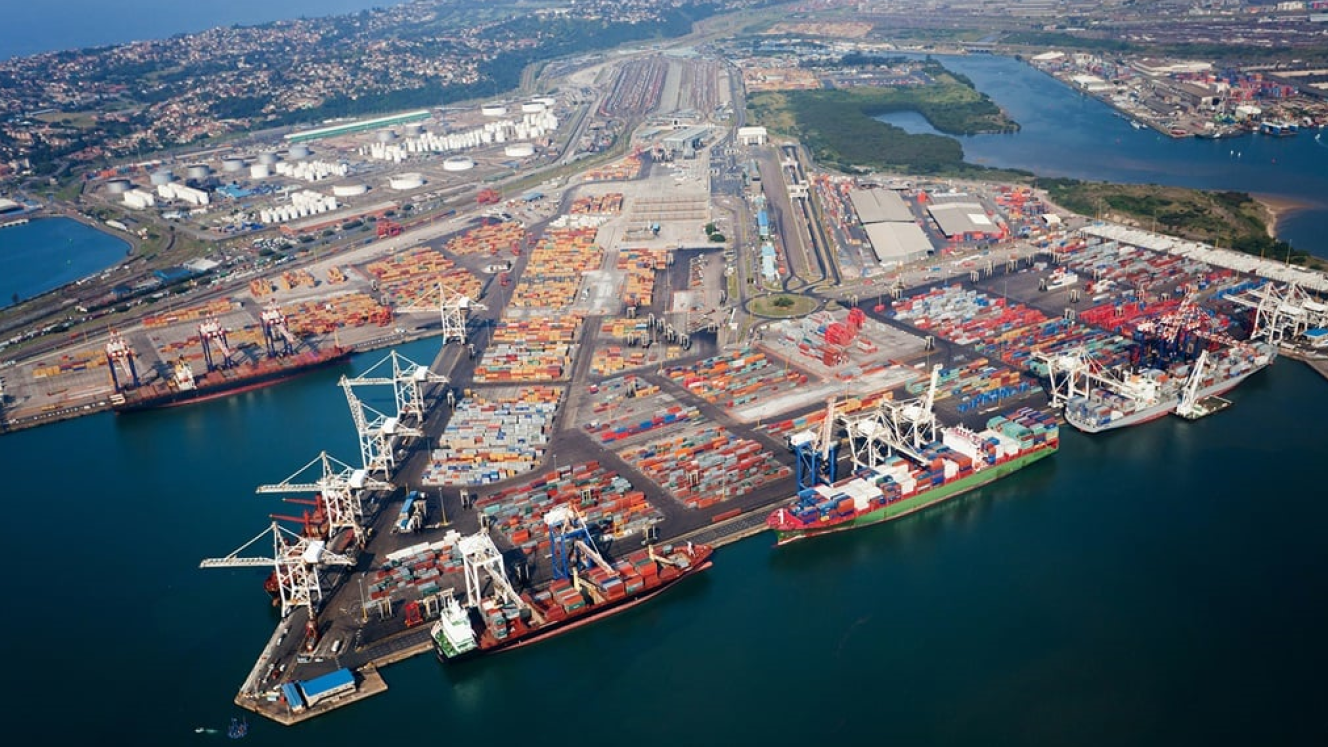
TRADE FROM Asia to South Africa is growing at a rate of 20-22% a year and all indications point to more of the same for the year ahead, says Safmarine’s Peter H. Ehrenreich. Speaking to FTW from Hong Kong recently, the regional senior executive for the Far East & Oceania painted a bullish trade picture with Safmarine well placed to tap into the growing market, particularly from Mainland China. Ehrenreich heads up Safmarine’s activities in Japan, South Korea, Mainland China, Hong Kong, Taiwan, Philippines, Vietnam, Thailand, Singapore, Malaysia, Indonesia and Australia and is based in Singapore with a regional office comprising 16 team members. “For most shipping lines covering the whole Asian range, business from Mainland China makes up around 70% of their revenue and volume – and Safmarine is no different," says Ehrenreich. “But we’ve also seen huge expansion in Indonesia, Vietnam, Thailand and South Korea,” he added. “Profitable growth together with our customers is our aim. We are five times as big as when I came here in 2003 and after Europe, Asia is now the second largest of Safmarine’s five regions. “We now have 11 dedicated Safmarine offices employing 140 people in Mainland China alone. All the other Asian countries have also seen impressive growth.” The emergence of the Mainland has not been particularly positive for Hong Kong, with a lot more direct traffic now moving straight to and from Mainland China. “That has translated into far less transhipment traffic for Hong Kong which last year, for the first time, did not see significant growth in volumes. “Since Mainland China joined the World Trade Organisation it’s much easier to establish a company there and get the licences required to work. And Hong Kong is not a cheap place to tranship. It makes good business sense to call at the Mainland’s ports directly.” But in terms of efficiency, there’s no disputing its rank. “A lot of cargo arrives on barges and some handling in port is done midstream without docking. Containers are stacked very high, which creates some challenges in typhoon season, but operations are extremely efficient. “They have far less space available than for instance Durban – but Hong Kong handles 10 times the volume of Durban.” Ehrenreich however predicts that Shanghai will soon be a bigger container port than Hong Kong and Singapore, with Shenzhen second. And one of its trump cards is its inland infrastructure, with government investment keeping pace with industry demand. But while the westbound route continues its upward spiral, exports to the east remain limited. “From South Africa it’s usually low-value, heavy duty commodities like copper, other minerals, starch, paper and some wine. There is also much fruit shipped to Asia but it has traditionally been shipped palletised in reefer ships. “This will increasingly be shipped in refrigerated containers and Safmarine will assist the stakeholders in this inevitable transition. We have been through the same conversion in so many other markets and this one is right in front of us,” Ehrenreich said.
‘Shanghai will soon overtake Hong Kong as trade growth escalates’
Comments | 0
© Now Media. This content is protected by copyright and may not be adapted or republished. If you would like to discuss cooperation opportunities, please contact: editor@freightnews.co.za.