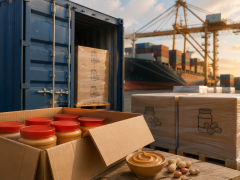
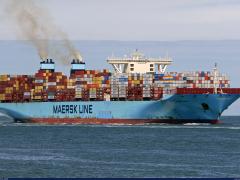
SOUTHBOUND VOLUMES from Europe have steered a traditionally static course over the past year with some shipping lines only expecting marginal growth this year. “That’s been the trend for the past seven years,” says Ron Frick, commercial manager of SAF/DAL, and it’s likely to continue. “A lot of manufacturing capabilities have been moved to the east where factories can produce more cheaply, and volumes on that route have grown 15-20% per annum. “Some factories have also relocated to eastern Europe where labour costs are much lower. The Czech Republic, Hungary, Romania and Turkey are growing markets for the manufacturing industry,” said Frick. From an export perspective the outlook is a little brighter with particularly encouraging growth in the refrigerated sector where more fresh fruits and vegetables are moving to Europe. This, says Frick, is largely because bulk reefer ships are losing their share to containers. “More and more Europeans are starting to buy in container loads rather than pallet loads. And with a lot of cargo now being sold while at sea it’s easier to divert a container to a different market than to send an entire ship.” To cope with the ongoing delays, the SA – Europe Container Service, a vessel sharing partnership between DAL, Safmarine, MOL and Maersk Line, has added a seventh vessel to its fleet. The Lica Maersk was introduced in October last year, helping the lines to maintain schedule integrity in the face of ever-present port congestion, both in South Africa and also nowadays in Europe. “The seventh vessel allows us more slack in the sailing schedule and brings us closer to our named-day service for which we were renowned.” Frick predicts around 5% growth northbound for year ahead, which is slightly higher than last year where the strong rand played a negative role. “A lot of companies sourced low value commodities like charcoal from the likes of Brazil which was much cheaper,” Frick told FTW. While January has been a quiet month from a general cargo perspective, reefer cargo has been pumping and vessels are running at full capacity, he added. “We have however seen a decline from our northern neighbours, particularly in tobacco shipments – Zimbabwe because of its economic meltdown and Malawi and Zambia because of the serious drought. “But they’ve now had good rains so we’re hopeful that Zambia and Malawi will slowly replace the volumes lost from Zimbabwe.”
Seventh vessel brings named-day service closer
Comments | 0
© Now Media. This content is protected by copyright and may not be adapted or republished. If you would like to discuss cooperation opportunities, please contact: editor@freightnews.co.za.