Rail freight will have to ratchet up its act if it wants a bigger piece of the pie, currently sliced at a miserly 20-25% compared to the 75-80% of bulk carriage attracted by road transport.
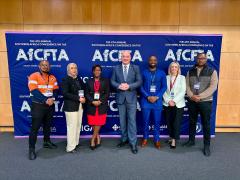
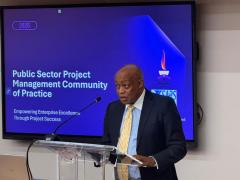
“Something has to give if we carry on as we currently are,” said Barbara Mommen, CEO of the Maputo Corridor Logistics Initiative (MCLI). Speaking at the Africa Rail expo in Sandton recently, Mommen said that although the demand for rail was increasing, capacity across the board was simply not keeping pace with volume.
“Road cannot continue to carry the bulk of cargo. It simply isn’t the best scenario for our corridor.” Part of the problem, she added, was that road hauliers were loath to shed load in favour of rail. But that situation has to change. “We all know that bulk road carriage is oversubscribed, is battling to cope, and that rail is not quite where it should be with capacity,” Mommen said.
Amplifying factors she identified included road losing flow-through capacity from congestion and incidents that were growing exponentially, and corridor rail losing share due to the high cost of non-performing assets. “That’s why MCLI, an interface facilitator of public-private partnerships, is advocating that we’re at a point where we need to have certain discussions about rail which really is on the backfoot as far as transport is concerned.
“It makes all the more sense,” Mommen added, “if we keep in mind that rail can be run at a much lower cost than road, with much healthier margins.”
Unfortunately a resurgence in the railway sector requires “significant capital investment, and these and other issues will simply have to be faced head-on”. Yet, from a volume-coping point of view, it could not be overstated, said Mommen, that worldwide revitalised rail was successfully alleviating capacity shortfalls. Should rail and road freighters continue to shun one another, real growth opportunities will continue to go a-begging.
“We urgently need to look at issues such as the non-existence of reverse logistics, environmental impact, congestion and cost efficiencies. “So many opportunities are lost because of lack of capacity.”
In adding MCLI’s voice to the quest for synchromodal collaboration, or greater bulk-sharing cooperation between road and rail, Mommen stressed that “solutions emerge when one starts to talk about them in a focused way”.
“It’s why we need to ask ourselves: can we afford to continue to operate according to the current status quo, or is it not time to talk about collaborative efforts?”
INSERT AND CAPTION
We all know that bulk road carriage is oversubscribed, is battling to cope, and that rail is not quite where it should be with capacity. – Barbara Mommen