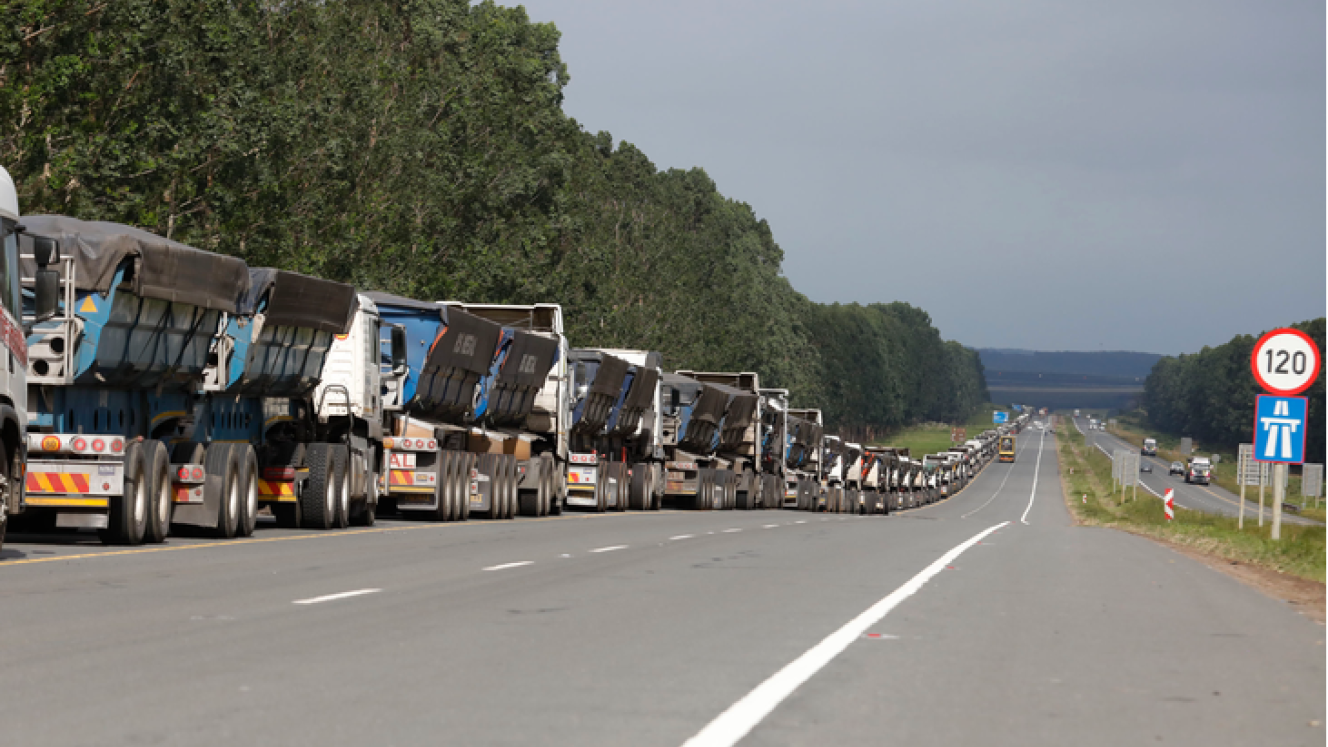
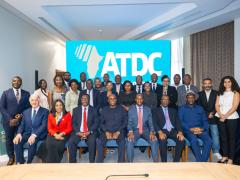
Self-regulation of the transporting industry in east and southern Africa is a critical imperative if the industry is to move forward and avoid further unnecessary cost increases, Barney Curtis, executive director of the Federations of East and Southern Africa Road Transport Associations (Fesarta), told FTW the impact of non-tariff barriers had led to a stalemate in the regions as authorities continued to introduce restrictive and punitive legislation which in turn led to a dramatic rise in costs. “The authorities in developing countries cannot effectively enforce the legislation and it is imperative that the industry workes with authorities to benefit the region. “Self-regulation is vital for this industry and must not be seen as just another form of enforcement. Non-tariff barriers are creating havoc and we believe that selfregulation is one of the solutions to their removal.” One example Curtis cited was the 38 weighbridges and check points on the 1000km stretch of road between Dar Es Salaam and Tunduma which carries about 200 trucks per day. “At Beitbridge border post we are seeing more inspections being carried out than necessary – and all of this is leading to transporters being delayed more and more. As a result trade facilitation suffers and costs continue to increase.” Curtis says that the Road Transport Management System (RTMS), a private sector initiative for self-regulation is to be piloted along the Trans Kalahari Corridor between Walvis Bay and Gauteng. “The Trans Kalahari Corridor Management Committee agreed to pilot the system on their corridor and meetings have been held to agree on a way forward,” said Curtis. “The three Customs authorities involved have expressed their interest in the RTMS and are working out how to incorporate it into the South African accreditation system.” Curtis said the system would be marketed to role-players across southern Africa to get as much buy-in as possible. “This is not just more enforcement by other authorities. It needs the buy-in of the entire industry.” It is vital that it is not seen as another “big stick” by authorities. If it is, the industry will not co-operate. “Individual attempts such as that of the Tanzania Truck Owners’ Association which gives its reputable members stickers are worthwhile, but the system can be abused. We believe that selfregulation through the RTMS is a way of ensuring compliance by the industry across the region.”
Self-regulation vital to avoid cost increases
Comments | 0
© Now Media. This content is protected by copyright and may not be adapted or republished. If you would like to discuss cooperation opportunities, please contact: editor@freightnews.co.za.