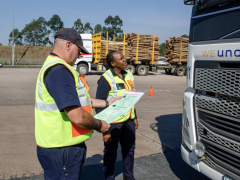
Security measures must change from being reactive to proactive and the 100% screening of cargo does not necessarily fall in the proactive category, according to David Fielder, who is the chairman of the Fiata advisory body on security matters. “There continues to be a drive for the 100% screening of all cargo. In fact EU 859 states that all cargo entering the European Union from February 1 this year has to be screened, but also states that countries with robust security programmes in place are exempt from this. This will continue until July 2014 after which they have called for the independent validation of freight forwarders.” Fielder said while Fiata worked closely with the International Air Transport Association (Iata) on several matters, this was one area where the two organisations disagreed completely. “It has major impact on the freight forwarder,” he said. “Let us take South Africa for example, which may be at the bottom of the world but is still a very important link in the global supply chain. Is what you term Part 108 effective?” he asked. “It only talks about the known shipper and not the cargoes. So does South Africa have the ability to keep up with the world that is moving towards 100% physical screening of all cargo?” He said with Part 108 the cargo was not taken into the risk analysis when in fact that was crucial in the process. “In India there is an airport that has 100% screening but yet security failed because they saw major theft. One must remember there is a definite difference between theft and terrorism,” he said. “If we are screening for terrorism, what about theft? We are seeing a growing trend of theft from cargo while on the aircraft or often during a cargo transit stop. There are weaknesses airside which are not addressed through 100% screening.” He said according to Fiata more and more knots were being tied over regulatory compliance that may not work. “And the more red tape and rules that are implemented, the less room there is for common sense to be applied to thwart terrorism.” According to Fielder, on the one hand you have organisations calling for the use of clear plastic pallets, for instance, so that the carrier knows at any given time what is on the pallet and therefore reduces the terrorism threat, while the freight forwarder wants a secure pallet to prevent theft. “Are the two diametrically opposed? On the one hand you have a call for full documentation to reduce risk, while on the other hand forwarders are saying if you disclose too much information you are enabling thieves to target your cargo,” said Fielder. “Without a doubt we will see increased security in the foreseeable future. We believe it is essential that we implement security measures that work rather than being reactive towards incidents without taking into consideration the impact of that on trade. CAPTION David Fielder … ‘There are weaknesses airside which are not addressed through 100% screening.
Security measures must consider impact on trade
Comments | 0
© Now Media. This content is protected by copyright and may not be adapted or republished. If you would like to discuss cooperation opportunities, please contact: editor@freightnews.co.za.