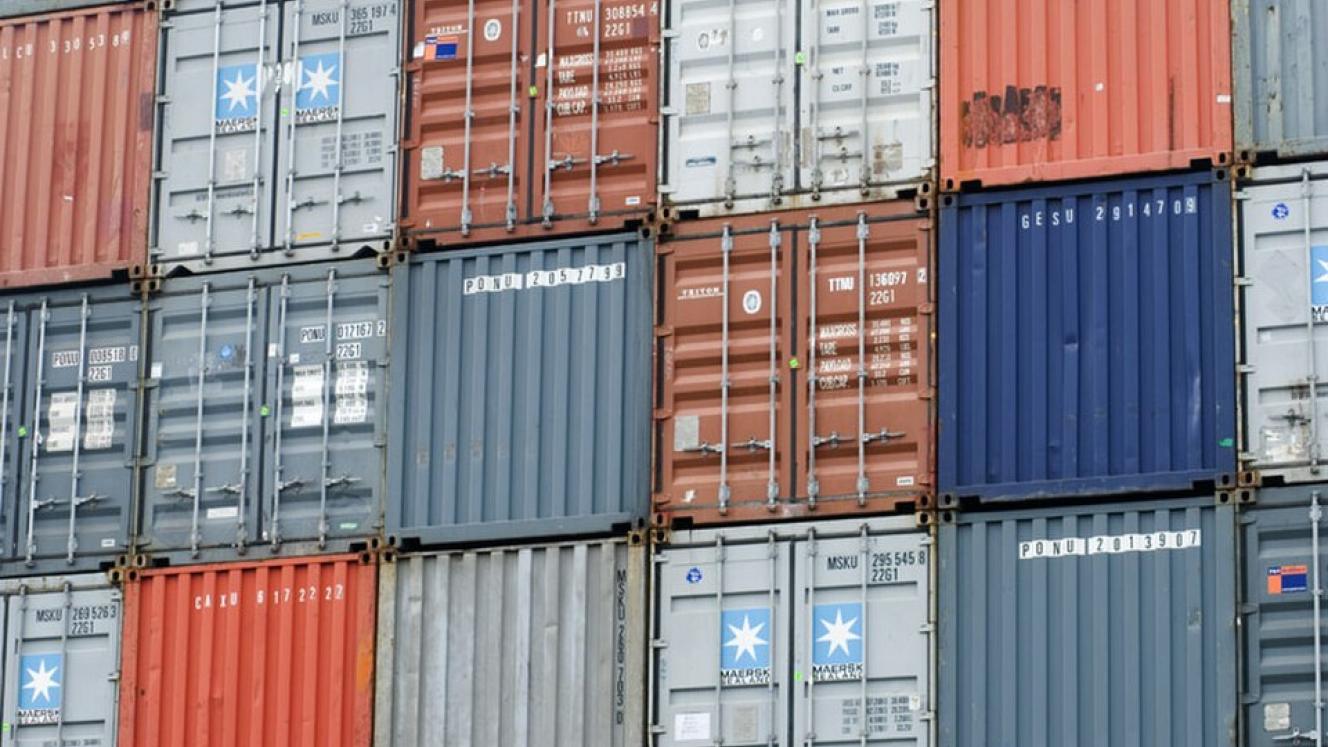
A recent incident involving a
container of scrap metal that
arrived at destination with seals
intact but filled with bricks
rather than metal brought into
sharp relief the issue of liability.
It was raised on Hariesh
Manaadiar’s popular shipping
blog by a Brazilian shipper
whose bad dream started when
his company bought 25 tonnes
(one container) of aluminium
scrap from a supplier in China;
personally supervised loading
the scrap into the container
and placing the seals on the
container doors; followed
the container to the port of
Xingang; and supervised
the delivery to the shipping
company’s warehouse.
When the container was
delivered to the port, he paid
the supplier, and only four days
later the container was loaded
on board the vessel.
On arrival the seal and
the shipping company seal
were both intact, but when
the container was opened
by customs, there was no
aluminium scrap inside,
only bricks.
The supplier/shipper term
was cost, insurance, freight
(CIF).
So, asked the perturbed
buyer, who should be held
responsible for this crime and
against whom should they file
the claim?
Looking for possible answers
to this case, FTW put it to
two lawyers who specialise in
marine insurance, and to an
expert marine underwriter.
In the first instance he must
claim against the insurer,
according to Andrew Robinson,
director of the legal firm,
Norton Rose Fulbright SA.
“Secondly, he must place
the carrier on notice for the
loss, as well as the owner of the
warehouse.
“The prospects of
recovering from
the insurers
are good,
subject to the
insurance
policy
terms.”
This is a
tough one,
according to
Andrew Pike, Durban-based
partner of Bowman Gilfillan.
“The CIF terms would
normally make the shipper
responsible, with risk only
passing to the buyer when the
container crosses the ship’s rail.
The trigger would normally be
the issue of a mate’s receipt or
bill of lading.”
However, if the shipping
company had its own
warehouse, it is conceivable
that the CIF terms could have
been modified by conduct or
implication to mean that risk
passed to the buyer when the
container was delivered to the
warehouse, especially if the
container was accompanied by
the buyer.
Given that the terms were
CIF and if the theft occurred
when the goods were in the
possession of the shipping
company (assuming the
warehouse was operated
by them), the claim would
probably lie against the
shipping line.
“However,” said Pike, “if
I was in the buyer’s shoes I
would immediately put both
shipper and line on notice
and simultaneously
present a claim
to the insurers
of the cargo.
But he also
pointed out that
the problem
was that both
seals were
intact, meaning
it is very difficult
to establish where
the loss occurred.
Looking at it
with an insurer’s
eyes, Dave
Keeling, a retired
marine insurance
executive and
former chairman
of the Association
of Marine Underwriters
of SA (Amusa), said that a
number of variants were
possible here.
His first thought would have
been the supplier, but the buyer
said they had loaded and sealed
at supplier’s premises.
The second thought was
possibly the shipping company
premises. But again the buyer
said that the
seals were all
intact when
delivered.
Keeling
also felt that it
should not have
been possible
on the ship –
unless they had
a shipment of
bricks.
So then
his thoughts
turned to the
possibility
that it might
have been after unloading pre
delivery at the destination port.
“But again,” he added, “there
were those intact seals.”
He suggested that a claim
should be lodged against the
insurers. “But they may just
say no, as it was clean seals.
However, they may be aware
of a number of similar losses
and already be investigating
potential culprits. Or they may
even appoint a surveyor to
investigate.”
That, Keeling added, was the
simple view.
“Over the years,” he told
FTW, “we have had any
number of ‘fraudulent’ seal
claims, and there is any number
of ways to get around the seal
protection. Not knowing what
seals are involved there could
be duplicated seals, ones made
with the same numbers as
originals.”
He added
that the seals
may not have
been ‘locked’
properly. “Then
they are simply
opened, cargo
removed and
replaced, and
then the seals
locked, so all
looks above
board. They
may even have
been able to
remove the
doors and
replace them once cargo had
been swopped.
“I would suggest they lodge
a claim with the insurers, and
gauge their response. If that
fails then they will have to
appoint their own surveyor
and let them investigate fully.
They may even be able to
identify where the bricks were
from and that would narrow
down the potential locations.”
In any event, Keeling
added, should they have
to proceed at law against
whoever was identified as
the culprit, they would need
substantive evidence to
support their allegations.
INSERT & CAPTION 1
Over the years we
have had any number
of ‘fraudulent’ seal
claims, and there is
any number of ways
to get around the
seal protection.
– Dave Keeling
INSERT & CAPTION 2
The prospects of
recovering from
the insurers are
good, subject to
the insurance policy
terms.
– Andrew Robinson
Scrap metal turns into bricks - but who is liable?
Comments | 0
© Now Media. This content is protected by copyright and may not be adapted or republished. If you would like to discuss cooperation opportunities, please contact: editor@freightnews.co.za.