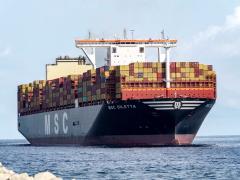
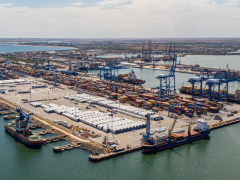
A new scrap export directive, which is aimed at controlling exports of recycled ferrous and non-ferrous material and is set for implementation on September 16, has drawn strong industry reaction. All export permits issued until the directive – dubbed the price preference system – is in force, will be valid for one month only, while volumes reflected in export permit applications will be “closely monitored”, according to a note in the Government Gazette. From September 16, scrap may not be exported unless it has first been offered to domestic scrap consumers at a discount for a specified period determined by the International Trade Administration Commission of South Africa (Itac), for local beneficiation. Itac pricing policy currently determines that scrap metal be offered to domestic users at a 20% discount on international spot prices. Itac will calculate the discounted prices for different scrap grades at the end of each month and publish them on its website. Under the new price preference regime, the regulator also wants to ensure that the quality of the scrap intended for export is accurately reflected on applications for export permits. All permit applications will have to be accompanied by a letter or certificate signed by a metallurgical engineer to confirm the grades, type and quantity of scrap available for export. The applications must also contain information showing where and when the scrap metal can be inspected by prospective buyers in the domestic market. A domestic buyer, which must be a foundry, mill, mini-mill or secondary scrap processor, must submit a signed copy of a sales agreement to Itac within 15 working days to indicate the volume taken from a specific seller. Itac will reduce the volume indicated on the application with that number and issue an export permit for the remaining volume within three working days. If a domestic buyer buys the entire consignment from a supplier, Itac will not issue an export permit for that consignment. Scrap sellers are currently getting export permits for specified quantities throughout their companies, instead of on a yard-by-yard basis. This creates a situation where some scrap suppliers could have an export permit for multiple tonnages of scrap, but are in fact exporting a much smaller quantity, Bob Stone, chairman of the Non- Ferrous Metal Industries Association, explained. “Currently, the export permit system is not properly policed by government to ensure that material is available prior to a permit being issued,” Stone said. He explained that looking at the government’s statistics it becomes apparent that scrap merchants apply to export more tonnage than they actually do. For example, the permits applied for by the recyclers during 2010 to export aluminium scrap amounted to more than double what was exported, Stone said, while in 2011 the industry applied for more than triple the exported amount. In 2012, he said, government numbers showed that again more than double the scrap tonnage was given export permits than what was physically exported. “This proves that the first priority of the recyclers is to sell the scrap overseas by ensuring that they have an export permit available for every kilogram of scrap they collect,” Stone said. “The local sales are only secondary.” Scrap buyers, mostly foundries that FTW spoke to, said they approved of the directive, since it would lower at least one input cost and give them access to better quality material that has typically been earmarked for export. In recent years, the scrap buyers in South Africa have been left with lower quality scrap, while having to pay international prices, they said. Scrap merchants, on the other hand, are opposed to the implementation of the scrap directive. They argue that South Africa is a net exporter of scrap, and the directive can only harm jobs in South Africa. Foundries in South Africa consumed only about 400 000-500 000 tpy of ferrous scrap of the 3.5 million tpy of ferrous scrap produced in South Africa. About 1.5 million tonnes of ferrous scrap was exported in 2012. Metal Recyclers Association (MRA) chairman, Mike Wilson, argues that forced domestic discounts on scrap, as per the directive, before being allowed to export at international prices, will make South African scrap uncompetitive in the international market, and could harm companies’ bottom lines. This could ultimately result in job losses. However, foundries have been grappling with rising input costs, resulting in more than 20 foundries closing in the past 10 years. INSERT 1 Scrap merchants are opposed arguing that the directive can only harm jobs in South Africa. INSERT 2 Scrap buyers approve of the directive which will give them access to better quality material that has typically been earmarked for export.
Scrap about scrap
Comments | 0
© Now Media. This content is protected by copyright and may not be adapted or republished. If you would like to discuss cooperation opportunities, please contact: editor@freightnews.co.za.