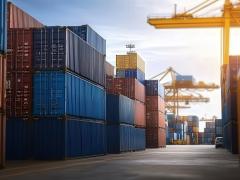
The recent announcement by Maersk Line of an order for ten 18 000 TEU vessels, with an option for an additional 20, has set a new industry benchmark. And while the dimensions and benefits of the ‘Triple E’ class – which promises economies of scale, improved energy efficiency and environmental advantages – make impressive reading, it’s only by contextualising the information that the reality of these behemoths of the sea becomes a little more tangible. The Triple-E will produce 20% less CO2 per container moved compared to Emma Mærsk and 50% less than the industry average on the Asia- Europe trade lane. According to information released to FTW by Kerry Rodrigues, Cape Town-based communications manager, this means that the vessel effectively travels 184 kilometres using 1 kWh of energy per ton of cargo, whereas a jumbo jet travels half a kilometre using the same amount of energy per ton. If the 18 000 TEUs carried by the vessel were to be put on a train, it would need to be 110 km long. And if they were put on top of each other they would almost reach beyond the stratosphere (47 km). Each of the two anchors of a Triple-E class vessel weighs 31 tons, equivalent to six adult African elephants. Combined, the accommodation and bridge are as high as a twelve storey building. The ships are equipped with a waste heat recovery system, saving up to 10% of main engine power. This equals the average annual electrical consumption of 5 000 European households. Facts and figures that would not long ago have made good science fiction material!
Science fiction in action!
Comments | 0
© Now Media. This content is protected by copyright and may not be adapted or republished. If you would like to discuss cooperation opportunities, please contact: editor@freightnews.co.za.