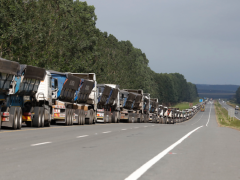
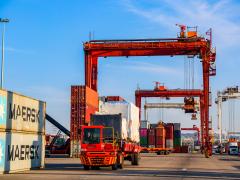
South Africa’s protectionist tendencies could result in a tit-for-tat retaliatory spiral against the growing number of anti-dumping duties imposed on anything from chicken to chips. According to Georg Southey, general manager for Merlog Foods, this has a dire impact on the industry as the “inward thinking” is not export production focused and it ultimately just results in higher costs. “There is no doubt that imports are necessary to supply our outof- ratio products,” said Southey, “and while we have some of the best protein products in the world, we have to import significantly to support our local market as only the top 5% of the market can afford the top products.” He said there were however direct indications that South Africa was trying to curb imports in what could best be described as a “protectionist” mode. “Through tariffs and antidumping duties we are trying to limit the amount of imports into the country to protect the local industry,” he said. Southey said South Africa was a major consumer of chicken feet that had to be imported in large quantities yet it was clearly curbing poultry imports from places such as America and Europe. “More recently we have put a 61% duty on frozen potato chips from Europe, while the application for anti-dumping duty against chicken from Europe is under way. We have curbed imports from America and several other places,” he said. “The duty on chips has only resulted in the consumer paying 61% more for their potato chips at the retailer. We have not protected the local potato chip industry.” He said actions such as the call for anti-dumping duties of up to 91% against countries such as Netherlands, Germany and the UK on their poultry were putting major restrictions on the import of goods into the country and could very easily be seen as protectionist. “Consumers are paying for what are essentially nothing more than trade barriers. At the same time, as South Africa is deciding to impose all these import restrictions, the European Union is deciding to implement stricter measures against Citrus Black Spot. “We are not taking the bigger picture into context,” he said. “The dynamic change that results with all these restrictions being put into place – especially in terms of the European Union – has an impact. The more we increase the duties and tariffs, the less we import which means we have fewer reefers coming into the country so we have fewer reefers available for exports.” He said a “you do this and we do that” scenario was starting to emerge. “And not just in terms of Europe. The Americans are unhappy extending the wine benefits to South Africa as we have closed off their chicken coming here on the basis of an anti-dumping duty that was imposed. Our actions have repercussions,” said Southey. He maintains that a position of fair trade should be sought at all times with a balance of inward and outward product flows and a price benefit to the consumer. “We must be wary of these defensive and protectionist activities,” he said.
SA's protectionism could backfire
Comments | 0
© Now Media. This content is protected by copyright and may not be adapted or republished. If you would like to discuss cooperation opportunities, please contact: editor@freightnews.co.za.