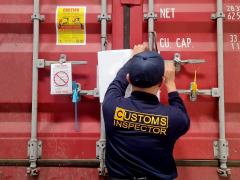
DESPITE A system introduced last February by SA Revenue Service to control ‘origin switching’ as a way round the quota system on imported Chinese textiles and clothing, this form of evasion still proliferates. Brian Brink, executive director of the Textile Federation (TexFed), is uneasy about just how effective it’s really been. The Sars system was aimed at importers of non-Chinese textiles and clothing falling within the 31 tariff items affected by the Chinese quota system introduced from January 1, 2007. They could be called on to produce certificates of origin (form DA59) to prove that they were not attempting to circumvent the regulations. “When details of the quota regulations and control measures were being formulated by Sars,” Brink said, “concerns were raised about possible origin switching and transhipping to circumvent Chinese quota arrangements. “From a close analysis of what’s coming in,” he said, “the quota system has certainly had an impact on volumes being imported from China. “But, since the quota came into being, a lot of new countries of origin have appeared to be coming out of the woodwork, and indications are that some of these are dubious sources of supply.” One of the more obvious of these is an old perennial in the origin switching game. “Made in Malawi” has been appearing once again. But, said Brink, the truth of this statement is a bit suspicious. “There was a crowd up there before who were involved in origin switching of textiles and clothing,” he added. “And it is quite possible they are at it again.” Brink is also unconvinced about some of the other “Made in…” labels. “Maybe the quota system, and Sars' proof of origin policy, has had some effect,” he said, “but I feel that the practice of transhipment and origin switching still proliferates.”
Sars appears to have lost ‘origin switching’ battle
Comments | 0
© Now Media. This content is protected by copyright and may not be adapted or republished. If you would like to discuss cooperation opportunities, please contact: editor@freightnews.co.za.