Discussions between industry
and the South African Revenue
Service over the customs
scanner at the Port of Cape
Town have reached a stalemate.
While industry continues
to demand action around
the scanner saying it has
significantly increased costs
and is not improving efficiency,
Sars is satisfied with the
equipment’s performance
saying it has found no proof
of inflated costs and that
efficiency has improved.
The high-tech scanner, part
of ongoing efforts by Sars to
combat illicit trade activities,
was launched at the port in
mid 2015 amidst much fanfare
but quickly lost favour after
industry claimed that it had
increased costs dramatically.
Carrier haulage became
a bone of contention with
industry claiming inflated costs
for the movement of containers
by shipping lines to and from
the scanner.
Customs legislation
determines that shipping lines
remain in control of containers
until they are released by Sars.
But with no facilities to lift
containers off trucks at the
scanner, importers are obliged
to have containers moved from
the scanner to depots where
the haulier of choice then picks
them up.
“This comes at an increased
cost,” explained one clearing
agent. “In the past the container
was moved via carrier haulage
to a depot where customs
would search it and then release
it. Now the shipping line moves
it to the scanner and then from
the scanner to the depot. More
and more containers are also
now scanned and physically
searched. The process is not
only more costly but it takes
longer than it did in the past
which is the exact opposite of
what we were told the scanner
would achieve.”
According to industry the
average cost now incurred with
the scanning process is close to
R10 000 per container.
“This is just an average,” said
the agent. “There are examples
of the costs being up to
R28 000. These are not costs
that we incurred before the
scanner.”
But Sars spokesman Sandile
Memela told FTW they were
of a different opinion after
investigating industry concerns
and claims.
“ The cost to move goods
on the lines’ hauliers (carrier
haulage) as prescribed by
current customs legislation is
marginally higher if the cargo
is released at the scanner site,
from where they can be moved
directly to the importer’s
premises. This was designed
as part of the solution. The
haulage includes return of
empty containers, making it
marginally more cost effective
than merchant haulage in
most cases,” he said. “Sars
could not find evidence of
inflated charges associated
with the scanner where the
arrangement between the
carrier and the agent had
been pre-determined to
deliver the cargo straight to
the importer’s premises in
the event of a release after the
scanner. It transpired however
that the majority of agents did
not have this arrangement in
place, although Sars Service
Manager provides for it in its
design.”
According to Mike Walwyn,
chairman of the Cape’s Port
Liaison Forum, industry
has requested that Transnet
Port Terminals (TPT) move
containers rather than
shipping lines in an effort to
address the cost issue around
carrier haulage.
But discussions around the
TPT movement of goods are
unresolved.
Memela also disputed
industry claims that an
exceptionally high number of
containers were being scanned
and still physically searched.
“Between four and 10
containers are scanned on
a daily basis in Cape Town
which amounts to between
28 and 70 per month. On
average, approximately
20% of these containers are
referred for physical searching
after being scanned,” he
said. “Sars is satisfied that
the scanner is currently
performing its role as a
mechanism to systemically
eliminate doubt in cases that
do not provide sufficient
evidence from the declaration
and the supporting documents
on whether they should
be physically examined or
released. The scanner also
performs a role in stopping
consignments that pose
serious safety, security and
health risks to the country or
other countries.”
He said according to
Sars the introduction of
the scanner had effectively
decreased the total cost to
trade as a large number of
containers that previously
would have been unpacked
for physical examination
were now being released
without the need for further
costly physical examination,
preventing delays.
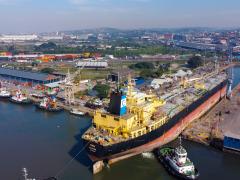
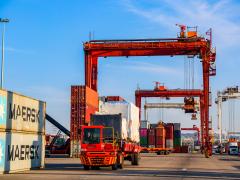
CAPTION
The Port of Cape Town... importers are obliged to
have containers moved from the scanner to depots
where the haulier of choice then picks them up.
Sars and industry at odds over costs and efficiency of scanner
Comments | 0
© Now Media. This content is protected by copyright and may not be adapted or republished. If you would like to discuss cooperation opportunities, please contact: editor@freightnews.co.za.