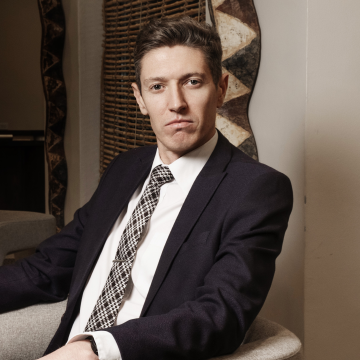
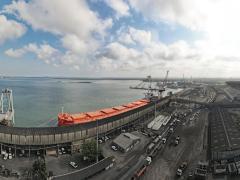
Forty years ago this month the first MSC ship called at a South African port, and now after 21 years at the helm of the local company, Captain Salvatore Sarno, chairman of MSC in South Africa, has announced that his son Rosario, 35, has been appointed managing director. But, Captain Sarno emphasises, he is not retiring and will remain active in the company. “I have always been and still am the chairman of MSC South Africa and will remain in this position at least for the next 10 years,” he said. “Where there was only one Sarno to lead the company, now there are two.” The announcement was made at a gala function in Durban to celebrate the 40th anniversary of the arrival of the first MSC ship to visit South Africa, the MV Raphaela. The little ship, just 100 metres long and with a deadweight of 4300 tons, had completed discharging on the west coast of North Africa when it received orders to sail to East Africa. She arrived in Durban on June 22, 1971 to take bunkers and to obtain the necessary charts for South and East Africa. Captain Sarno told the 400 assembled guests of how he had joined the ship in January of that year in Bremerhaven where the Raphaela had just been purchased from Hapag- Lloyd. “I met for the first time her owner, the 31-yearsold Gianluigi Aponte.” He said he realised immediately that he was a very special man. “I liked his love for ships and I liked to listen to his dreams. Immediately I started to dream with him. “From then our story started and my wife Sandra and I became part of the special family that is Mediterranean Shipping Company.” Captain Sarno said he specifically asked for the special commemoration to be hosted in Durban’s N-Shed passenger terminal, “in our port, a few hundred metres from where we berthed for the first time forty years ago.” While congratulating Transnet and its management for the initiatives to improve the infrastructure of the port and its container terminal, Sarno added, “I would like to recall once more that a good improvement of the infrastructures without the necessary investment in people will not bring necessarily a better productivity. “In getting the best from staff we will get rid of this congestion and our container terminal will be the number one in Africa.”
Sarno and Sarno head up MSC
Comments | 0
© Now Media. This content is protected by copyright and may not be adapted or republished. If you would like to discuss cooperation opportunities, please contact: editor@freightnews.co.za.