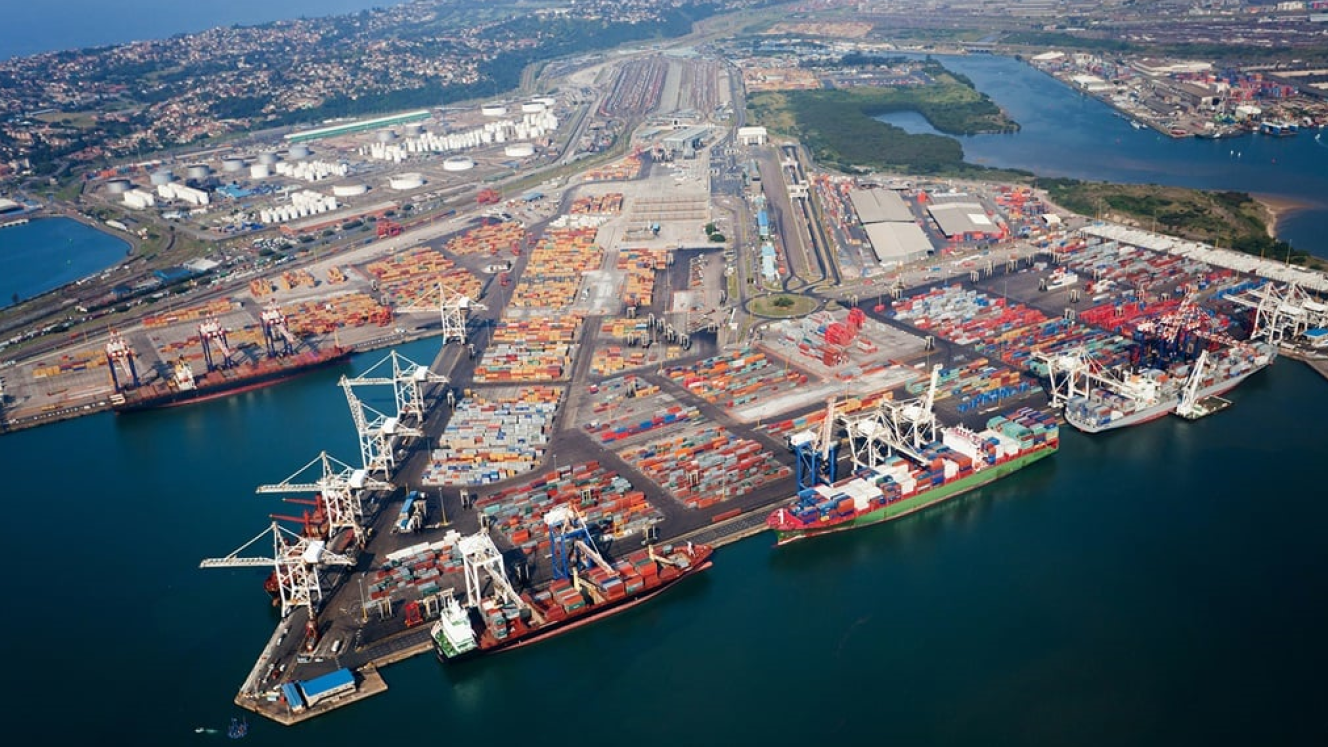
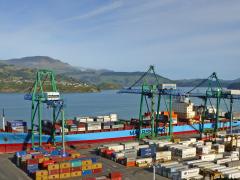
Terry Hutson SA PORT Operations chief executive Tau Morwe and his management team have confirmed contingency plans for the busy months ahead at South Africa's ports. "We have put in place a three-year contingency plan in Durban to deal with increased container traffic until the development 2005 capacity expansion programme is complete. This plan also includes measures for Cape Town and Port Elizabeth," said Themba Gwala, GM Operations: Durban Terminals. SAPO has forecast a 6% increase in container traffic for 2002, which means that Durban, already at its theoretical capacity, will handle 1,30 million TEUs this year, compared with 1,22m in 2001. "In itself that is not a problem and we could cope," says Gwala. "The problem lies with the peaks and troughs. If a major portion of that 6% comes through the port over a few months only, as happens from mid-year to November, then the possibility for congestion exists, especially if all stakeholders in the logistics chain do not co-operate." Gwala said that an added factor was that cargo no longer followed traditional patterns with exports decreasing as imports increase and vice versa. Over the past couple of years the weakening rand has boosted exports substantially. The peaks and troughs are where the rub lies, so far as both Durban and Cape Town are concerned. It's one thing for the industry to complain about productivity levels and to make comparisons with overseas ports such as Singapore. But with the common user principle in place, which forces Sapo to accept all types of vessels, to which is added the tendency for bunching of vessel arrivals, then it seems inevitable that things are going to get tight during some of the months ahead. The Durban container terminal for example has seven available berths. When ten or more ships arrive on the same day, then even with the best intention in the world some ships are going to be delayed. Cape Town, which normally operates three container berths, faces similar challenges. Both ports are presently operating at 90% occupancy levels, which is high by international standards. Of the contingency plans put in place (FTW May 31, 2002 and June 7, 2002) some self-geared ships are already being handled at Durban's multi purpose terminal. Lines with cargo on ships destined for Gauteng have been offered the choice of discharging at Port Elizabeth and the straddle carrier replacement programme at Durban is well underway. Sapo has however stressed that no ships are being diverted to Port Elizabeth, which would be a last resort. About 45% of containers on board ships calling at Durban are destined for the Durban region, so the opportunity for the East Cape port lies with Gauteng-destined traffic only. Meanwhile a berthing slot system involving 19 shipping services is being piloted at DCT's berth 204, with ships booking fixed berthing slots in advance. A dedicated team operating from a special office at DCT is handling this and the programme has been extended until the end of July for assessment.
Sapo spells out contingency plans for busy months ahead
Comments | 0
© Now Media. This content is protected by copyright and may not be adapted or republished. If you would like to discuss cooperation opportunities, please contact: editor@freightnews.co.za.