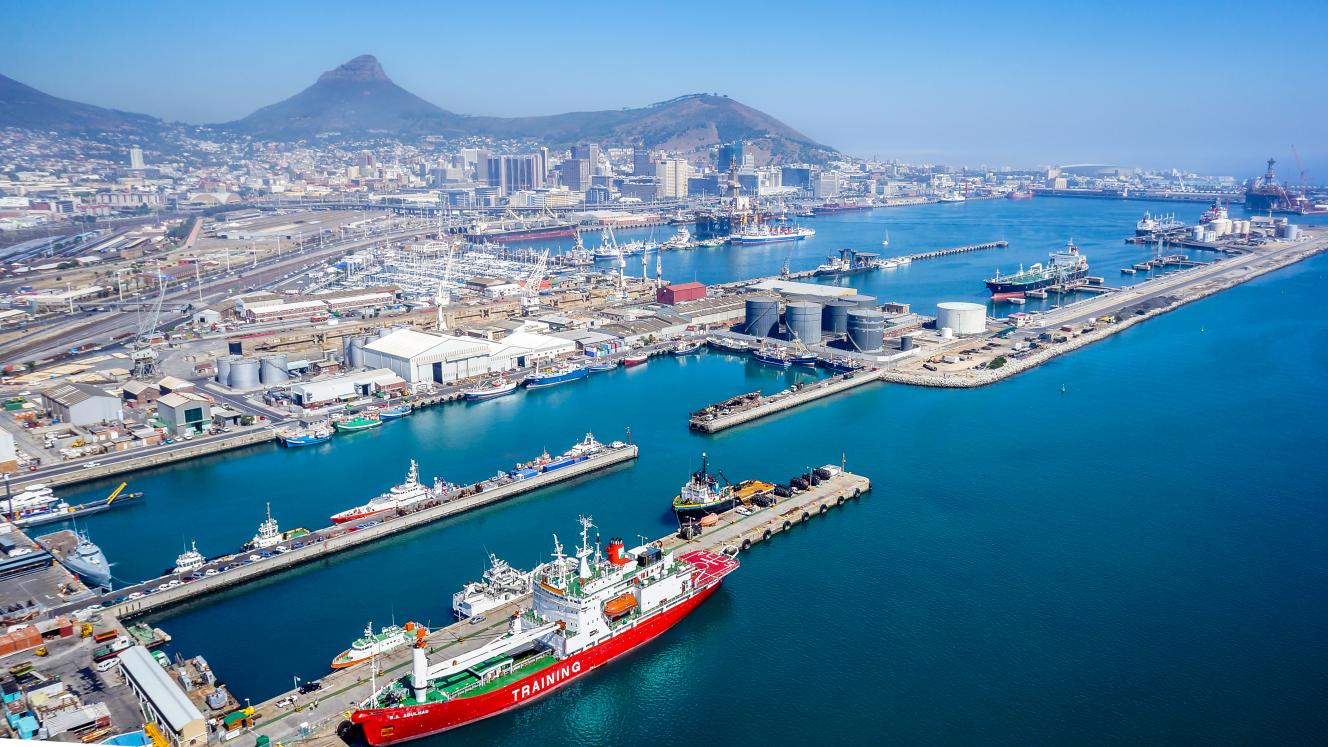
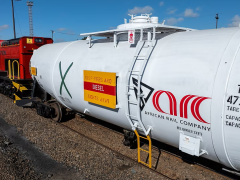
The SA Association of Freight Forwarders (Saaff) has expressed concern at some of the reasoning in Transnet GCE Brian Molefe’s recent comments regarding vertical separation of the SA rail network (FTW September 9, 2011). Referring to his statement that South Africa’s singlecustodian state ownership of ports, rail and pipelines is unprecedented globally and that the country has an institutional structure for its port, rail and pipeline network that is internationally envied, they comment: Virtual monopoly No doubt any envy emanates from other suppliers of logistics facilities that would no doubt be only too happy to have a virtual monopoly on the movement of the majority of a country’s imports and exports. The section stating: “Separating railway operations from network planning and infrastructure is not a new concept …and that international experience has demonstated that separating operations from network management has not produced desired results” was also rejected. Experience of this principle – clearly not taken into account by the author – appears quite different, they said. The liberalisation of rail systems in many countries, including the UK, has been highly successful. The introduction of private operators in a liberalisation programme proved successful in that country – and in Sweden, Germany, Argentina and Brazil. With private operators running rail services in the UK, passenger volumes have increased from 750 million trips at the time of liberalisation in the mid 90s to 1.3 billion in 2008. The UK’s private rail services experience on-time arrival rates at over 90%. In complete contradiction to Molefe’s comments, liberalisation of rail services allows private operators to improve service, revenues, passenger trips and passenger satisfaction. “Programmes to improve operational efficiency are already yielding results” was also a point of some argument from Saaff. ‘No material increase on Durban-Jo’burg route’ There is no doubt that bulk rail services such as the Sishen-Saldhana operation and the coal lines to Richards Bay are a success and the only viable means of moving the required volumes, the spokesmen said. However, the Transnet Freight Rail (TFR) efforts to improve service on the route between Durban and Johannesburg, though laudable, have seen no material increase in volumes. Transnet Port Terminal’s (TPT’s) own figures for July indicate that less than 19% of import/export containers handled at Durban container terminal (DCT) Pier 2 are moved by rail. Molefe’s statement that “The claim that South Africa has the most expensive ports in the world is alarmist, careless and misleading” was met with an equally abrupt dismissal. ‘Every survey points to SA’s high port costs’ The author clearly disagrees with virtually every survey conducted comparing ports cost in South Africa with those abroad including that presented by the Ports Regulator in 2010, said Saaff. The Transnet National Ports Authority (TNPA) and TPT tariffs to the exporter for a 40-foot (12- metre) container are: Cargo Dues – R2015.65, and terminal handling charge (THC) – R1405.00, a total of R3419.65 (US$489), not the US$907 he indicates. This compares with a benchmark of overseas ports prepared for the automotive industry of US$265 per 40 ft (12 m) container (2009 figures). He fails to indicate that cargo dues on an import container are exactly double – at R4056.13 – whereas there is not generally a differentiation elsewhere. For a survey to find that the performance of SA Ports is “above average” really does beg belief, said the Saaff spokesmen. Two statistics will suffice to counter this description. DCT Pier 2 gross crane moves per hour: approx. 19 in 2011 whilst their own target is 27. Container vessels at anchorage off Durban waiting to berth totalled 10 in the last week of August. Molefe’s statement that: “The key issue for SA and Transnet is lowering the total cost of logistics” was met with a burst of complete disbelief. According to Saaff, for a Transnet key performance indicator (KPI) to be the reduction of logistics costs, one can only wonder why the TNPA has requested a tariff increase of 18.06% for fiscal 2012. A likely conclusion from the vast majority of port and rail customers would likely be that a state-owned monopoly enterprise never has, and never will, obtain the levels of efficiency needed in a modern economy attempting to compete internationally. It is disappointing that the GCE does not recognise that. Clearly we will continue to experience the frustrations of high cost and poor operational performance of Transnet’s divisions.
Saaff speaks out against Molefe’s rail privatisation claims
Comments | 0