South Africa’s transport energy
demand is set to increase by
a whopping 25% over the
next 20 years making the
need for lower input costs
crucial, according to Carel
Snyman, general manager:
cleaner mobility programme
at the South African National
Energy Development Institute
(Sanedi).
“South Africa is very
dependent on crude oil and coal
that we convert to the energies
we use in our economy – but we
have massive production losses
as well as consumption losses,
meaning the work we are doing
in our economy is just not done
very efficiently.”
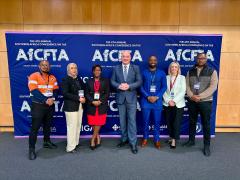
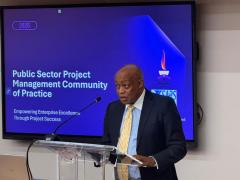
Addressing the annual Road
Freight Association conference
recently, Snyman said
sustainable meant “not burning
stuff to produce the energy that
we need”.
“By that I am not saying that
we need to throw away trucks
tomorrow, but we need to be
aware of the situation and find
ways of doing what we do more
efficiently.”
He said most of the energy
was consumed on roads using
petrol and diesel. “Almost 65%
of the energy is lost as heat
and only 15% of the energy on
average becomes kilometers.
If one thinks a vehicle is a
mobility tool – as that is what it
does as it produces kilometers –
the fact is it is a better heater.”
Snyman said at least 85%
of South Africa’s energy was
thrown away through the
process of oil importation,
refining and burning fuel while
driving.
“It’s like buying five beers to
drink one and four are simply
thrown away,” he said.
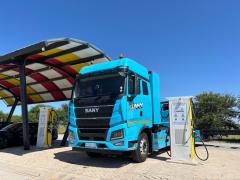
If South Africa moved
towards electric vehicles
it would already be
more efficient, but
renewable energy
remained the
optimum way to go,
said Snyman.
“Driving on sunshine is one
of the best sustainable options
that we have and it is becoming
more possible,” he said. “South
Africa has to increase its use of
solar for energy generation if we
want to become more efficient
in this country.”
He said generating electricity
via solar was a prime solution
thanks to the huge amount
of sunlight in Africa which in
turn could be used for electric
vehicles across the various
modes of transport - be it road
or rail.
SA should be ‘driving on sunshine’
Comments | 0
© Now Media. This content is protected by copyright and may not be adapted or republished. If you would like to discuss cooperation opportunities, please contact: editor@freightnews.co.za.