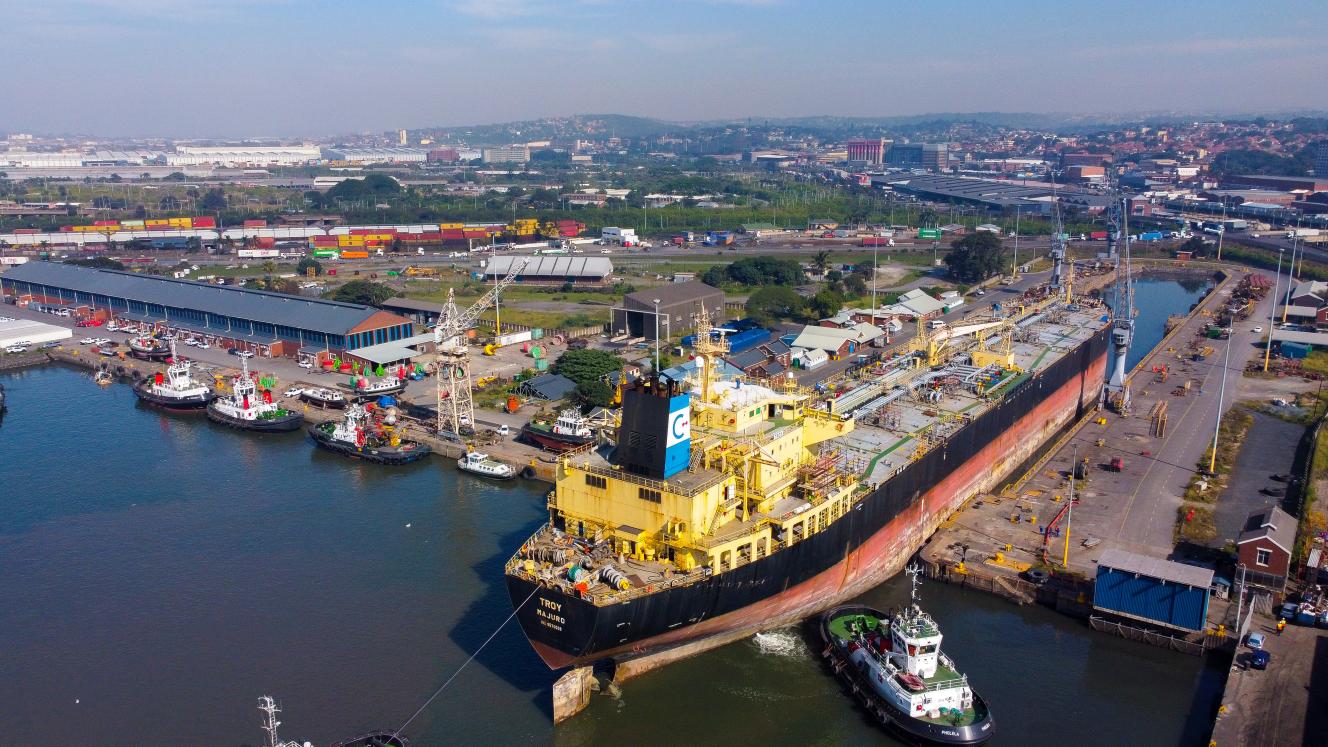
Efforts to build an SA ships’ register – which is currently devoid of any long-haul, deep-sea cargo vessels – are generating considerable controversy. It’s among the proposals in the 20-year maritime development framework to be presented to Cabinet by transport minister, Ben Martins, and director-general, George Mahlalela, before the end of this year. Although the idea of SA-registered shipping lines, able to compete in the world’s cut-throat shipping market, is praiseworthy in theory, it is considered to be almost impossible to put into practice. One step in the right direction has just been taken by the SA Maritime Safety Authority (Samsa), which is advancing the idea of the creation of a state-owned maritime bank that would provide funding to the industry. But a major drawback still remains. That is what is described as SA’s unfavourable and inappropriate tax regime, a current system that offers no true advantage to aspirant SA shipowners. A shipownerfriendly tonnage tax is considered to be one basic means of getting an SA ships’ register off the ground – but is one that government has so far refused to consider. Indeed, government’s main means of getting the register going has been restrictive rather than constructive. It has proposed the introduction of cabotage regulations, which would require that ships servicing ports within SA’s waters carry the country’s flag. In addition, cargo reservation is being examined, which will require that a certain amount of SA’s cargo be carried by SA-flagged vessels. But it’s all considered to be a real Catch 22 position. You can’t have SA goods carried by SA-flagged ships until you have SA-owned and registered ships. And, no matter how much you demand this, it won’t happen till SA ownership becomes a sustainable (profitable) pursuit. It’s really such an unbelievable situation that an SA shipping authority suggested that the government’s proposal for cabotage and cargo reservation asks the question: “Just what are they smoking down in Cape Town?” Looking to get a reasoned response to the government’s proposals, FTW talked to a shipping line executive with extensive experience both in SA and abroad. He remained unnamed due to his business position, and his necessary working relationship with government. He opened by stating that the objective (an SA ships’ register) was laudable, and that the Samsa CEO, Tsietsi Mokhele, was to be congratulated for the energy he had brought to the debate. “I do not, however, believe that implementing restrictive practice is the best way to achieve this. “My main concern is that – when we are selling our minerals – we are not in a position to dictate to the buyers the terms by which we do so, as long as there are alternative sources of supply, as there are for iron ore, coal and manganese, which constitute the larger proportion of our mineral exports.” This means, he added, that we are a “price taker” and not a “price maker” in these commodity markets. As an example, according to the SA Chamber of Mines, we have 80% of the world’s known reserves of readily mineable manganese in SA – yet we only supply 20% of global consumption. “Any measure that reduces the size of exports, as these proposals risk doing, would undermine rather than enhance the overarching aim of creating additional employment in SA.” A further step in his thinking led to him issuing the caution that SA’s major trading partners had established shipping interests – and had amply demonstrated their resolve to defend those interests. “Any restrictive practice implemented on our part would undoubtedly be met with a ‘tit for tat’ response,” he said. “You can look at the Chinese state’s defence of their Cape Size owners’ interests, where they banned Vale’s VLOCs (very large ore carriers) from Chinese ports on grounds of safety, despite the fact these vessels were built in Chinese yards, as a current example of this.” He also told FTW that he believed that the way to achieve the objectives of securing SA-owned and flagged vessels could only be sustainably achieved through the creation of an enabling environment. “This means,” he said, “making SA a competitive jurisdiction for ships’ owners to be domiciled in. In turn, this means addressing the tax regime – including corporate income tax, dividends tax, personal income tax and capital gains tax. We would also have to waive exchange controls for the sector. “As for the performance of the register itself, there would have to be a review of home affairs (for the issue of work permits) and labour law restrictions. And, to secure international sources of ship finance, we would have to make changes to the mortgage ranking. “Simply, we should look at best practice from around the world and adopt similar or better." INSERT ‘Implementing restrictive practice is not the best way to go.’ CAPTION You can’t have SA goods carried by SA-flagged ships until you have SA-owned and registered ships. And, no matter how much you demand this, it won’t happen till SA ownership becomes a sustainable (profitable) pursuit.
SA ships’ register a laudable but impractical purcuit
Comments | 0
© Now Media. This content is protected by copyright and may not be adapted or republished. If you would like to discuss cooperation opportunities, please contact: editor@freightnews.co.za.