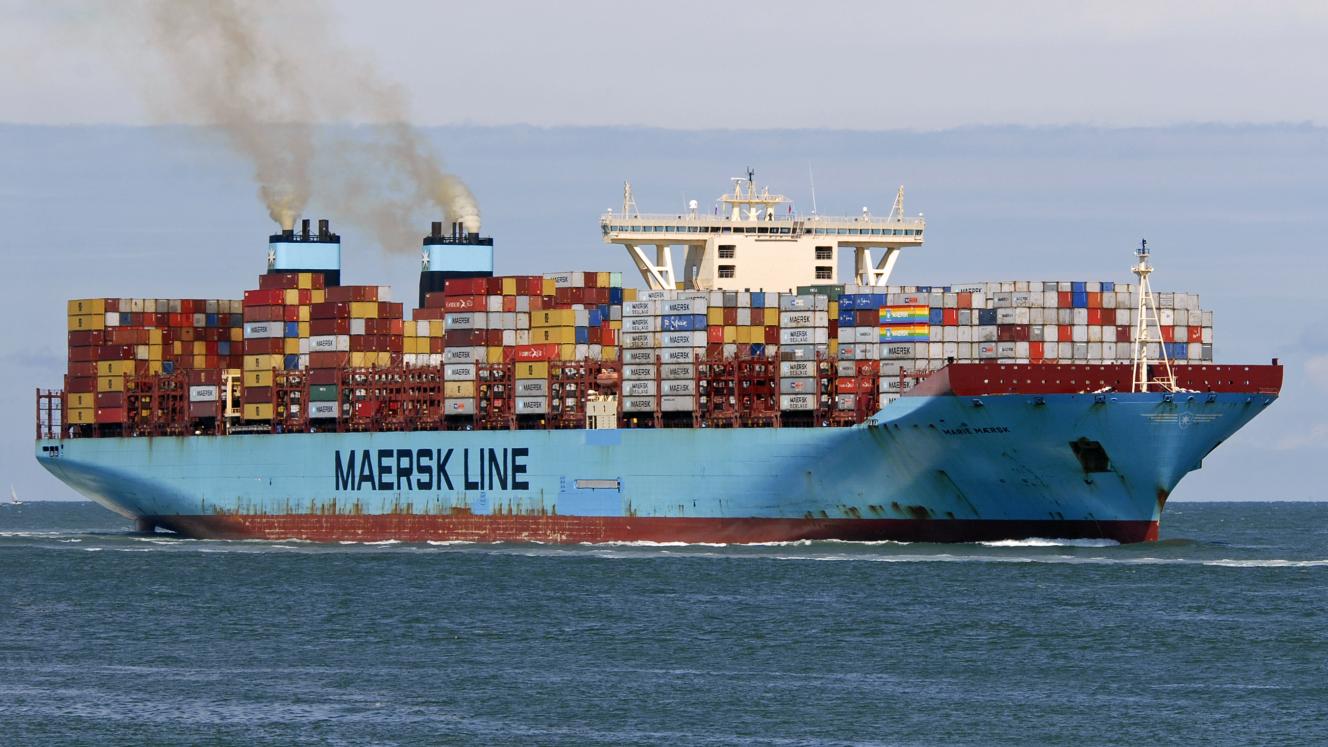
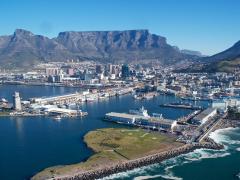
Contrary to media reports from Europe, US and Asia suggesting that shippers and forwarders are now looking closely at the financial stability of ship operators in making their line-choice decisions, this is not yet such a vital part of SA business thinking, according to a consensus in the freight industry. Overseas reports indicate that decisions are currently being biased in favour of what are perceived to be more stable operators. This is resulting in shippers leaving some shipping lines out of contract tenders because of the state of the shipping industry. It is a trend that was best expressed by Nestle’s head of global ocean transport, Brett Whitfield, in a talk at last week’s Global Liner Shipping Conference in London. Reported by IFW, Whitfield said that the financial stability of carriers was a serious concern for shippers. “We take each one of our carriers and ask: ‘What is our exposure? What is our risk?’ “There are some carriers we are watching very closely with a well-focused microscope, and this year we are leaving some carriers that we feel pose a significant risk to us, out of our tender.” Nestle was hoping to reduce the number of carriers it uses to transport the 360 000-TEUs it moves annually, to around 45 this year. But Whitfield said that ultimately the food and consumables giant was too nervous to do that. “We are nervous, not so much for the survival of the carrier, but the survival of the route.” Concerns about service stability were also expressed by Ron Widdows, CEO and president of shipping line NOL. “When core freight rates approach free – that’s pretty low,” said Widdows. “This must change because it’s unsustainable. “People cannot operate this way and sustain services to the market.” But these worries are not so prevalent in SA, according to FTW commentators. Pete Williams, MD of Safcor Panalpina, said he was not aware of any increased focus on line stability amongst forwarders in this country, although it would have to be a natural concern for anybody in the freight business. This he attributed mostly to the fact that SA trades tend to be handled by major lines in the global shipping industry. Mike Walwyn of Seaboard suggested it was logic for SA forwarders to assess whether any lines were unstable – like noting the recent collapse of Sails. “But I don’t see any real problems in the offing,” he said. “And any lines that are financially doubtful are likely to withdraw their services before they cause any damage.” However, he added, this principle is simple risk analysis. “I think this is something that most people in the trade would be looking at closely, given the current economic tough times.” Dave Watts, Kwa Zulu Natal shipping director of the SA Association of Freight Forwarders (Saaff), agreed. “I’d hope that forwarders would do this automatically,” he said, “as it’s really part of how they should look after their clients’ interests. “But I doubt that it’d be major thinking here, because few of the lines serving SA are likely to go bust mid-voyage – something that would be a major disaster for shippers and forwarders. Getting caught with a midvoyage collapse would certainly impact forwarders, according to Roland Raath, MD of Cargocare Freight Services. “But SA is likely to be a lot less affected than the US or the UK, for example, as there is still a fair bit of trade to and from Asia and Europe,” he said. “Anyway, the trick is to see who’s rationalising services, and stick to the major lines that are more solid, and still carrying good volumes of containers. Although many of them are also rationalising services, they are unlikely to go bung mid-voyage.” His picture of the SA market at the moment is that the cutprice freight rates period is coming to an end, and lines are likely to be on a rates restoration path for Chinese cargoes from May onwards, with the US and Europe likely to follow later in the year.
SA less exposed to ‘unstable’ carriers
Comments | 0
© Now Media. This content is protected by copyright and may not be adapted or republished. If you would like to discuss cooperation opportunities, please contact: editor@freightnews.co.za.