South African business sentiment has hit “rock bottom” and the economy could follow suit into contraction if load shedding continues in the next few weeks. This was the word from Efficient Group economist Dawie Roodt this week as the country groaned under the burden of Eskom’s Stage 4 load shedding schedule and businesses in the transport sector improvised by seeking alternative solutions to keep the lights on during the rolling blackouts. Roodt said that while it was still early to make specific predictions regarding the impact of load shedding on the economy, there was a knock-on effect throughout the business sector, especially manufacturing. “The mere fact that Eskom is generating less electricity means that there is less production in the economy and that electricity is an input into something else, which is not going to be produced less,” Roodt said. “If it goes on for another two weeks or so, we are going to go into contraction in the
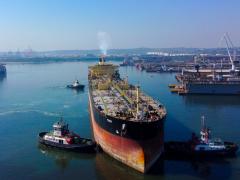
economy. I speak to business people all the time and I’ve heard people swearing about the state of the economy. Sentiment is rock bottom. They have lost hope. People are now thinking about what they can do to protect themselves,” Roodt said. He said some businesses, especially those in the service industry, were investigating alternative energy sources to take their offices off the Eskom grid, but that for factories this was not an option due to the high costs associated with doing so. Peter Besnard, CEO of the South African Association of Ship Operators and Agents, said businesses in the sector had invested in alternative energy solutions to keep their offices powered during load shedding. He said Durban Port had functioned as normal as the port’s operations had not been affected by load shedding. However, Besnard said exporters and manufacturers which did not have generators would be most affected as there would be delays in getting goods to port as well as production stoppages during the blackouts. “I am sure it is going to take
its toll,” Besnard said. Durban transporter Kevin Martin said the road transport sector was not severely affected by load shedding at this stage as firms were not heavily reliant on electricity for their operations. “At the Durban Port terminal they have got generators that keep the lights on, but it is the smaller
industries that are getting hammered because they get to work and cannot work or produce anything because there is no power,” Martin said. “In general, transport weathers it better than any other industry. But transport is reliant on other industries and if they are not producing anything, there will be nothing to transport. In the medium to
long term, it will hit transport very hard because we would have a fall in demand,” he said. Martin said currently, the only disruption was caused when clients were unable to receive or hand over goods and when traffic lights were not working, although it was often quicker to travel through city intersections when the lights were out.
SA businesses hit by knock-on effects of load shedding
Comments | 0
© Now Media. This content is protected by copyright and may not be adapted or republished. If you would like to discuss cooperation opportunities, please contact: editor@freightnews.co.za.