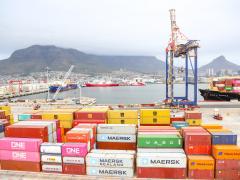
TRU-CAPE CEO Charles Hughes is not given to rash predictions but is hopeful the recent furore over Chinese product safety may accelerate the protocol for the export of South African apples and pears to that populous land. “We are really hoping, having been given an assurance they are trying to fast track the protocol,” Hughes told FTW recently on his return from his 46th visit to China. “The problem, unfortunately, is all this noise being made about safety in China, which is regrettable. “Ironically, while I was there, the Americans had to make a public apology to China because of all the nonsense about toys withdrawn by the million from shop shelves over metallic content – which was largely due to the Americans and not the Chinese.” Hughes says the Chinese government is nevertheless taking the whole issue of commodity safety – and that would include fruit – very seriously indeed. It has, as a consequence, put all else – the apple and pear protocol with South Africa included – on the backburner. But he’s optimistic that exports may start in earnest to mainland China next year. “That is why we keep on going there.” Volumes, he says, will pretty much be determined by what South Africa is able to produce. Fortunately, the rate at which growers invest in replacing fallow orchards with new trees is an important indication of the current agricultural economy and even more importantly a yardstick of what consumers can expect to eat five years down the line. Growers agree at least five percent of their farm, should be replanted annually so that over the 20-year lifespan of an apple or pear tree, an entire farm will be regenerated. Hughes, greatly encouraged by this state of affairs, says Grabouw, Vyeboom, Ceres and Langkloof fruit growers have shown recovery from the lean years of the last decade and are now in a position to invest once again in their farms. “Four years ago, nobody planted apples in the Elgin valley and some growers elected to plant grapes instead, so it is significant that replanting today is almost at the level it should be.” The current apple and fruit season, which gets under way in February, is drawing to a close, with only fruit left for domestic consumption. “We had a reasonably good year and can’t complain. The market was pretty good and the exchange rate helped a lot, particularly with regard to prices in Europe and the UK.” Hughes cannot put his finger on total production volumes for this season but says Tru-Cape, the largest producer and exporter of apples and pears with 35% of the market, says the industry exported about 22 million cartons of apples and 10 million cartons of pears, with the local market accounting for 12 million cartons of apples and 5 million cartons of pears.
SA apples and pears move closer to Chinese market access
Comments | 0
© Now Media. This content is protected by copyright and may not be adapted or republished. If you would like to discuss cooperation opportunities, please contact: editor@freightnews.co.za.