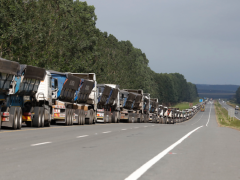
Route clearance remains one of the top priorities for the swift and successful delivery of cargo in the renewable energy sector. According to Philip Warren, managing director of African Route Clearance, this is due to the fast pace that turbines have to be delivered to sites that are often remote in location. “Planning starts months in advance when bridges and roads are inspected, looking at height and weight that can be carried on them to ensure the heavy and large loads can move swiftly,” he said. “In this sector not only is one moving large and heavy loads, but it is being done frequently. To ensure the delivery speed can be maintained, the route has to be clear – and just as important, contingency plans have to be in place.” In many instances, said Warren, bridges have to be propped and road surfaces prepared prior to the movement of cargo. “One has to remember that in Africa only about 19% of roads are paved and many roads are old and in need of maintenance. The quicker one can start with a route survey, the easier it is to start planning and preparing for the challenges identified.” For Warren there is a neverending list of aspects that have to be taken into account. “One is not clearing a route for only one abnormal load but for up to ten a week for several months. It is very important in this regard that one knows exactly what the roads and bridges can handle and can plan accordingly. It is very difficult to problem solve in the middle of a delivery schedule as a single hiccup can bring installation at a project site to a complete standstill.” INSERT & CAPTION Planning starts months in advance when bridges and roads are inspected, looking at height and weight that can be carried on them to ensure the heavy and large loads can move swiftly. – Philip Warren
Route clearance demands contingency planning
Comments | 0
© Now Media. This content is protected by copyright and may not be adapted or republished. If you would like to discuss cooperation opportunities, please contact: editor@freightnews.co.za.