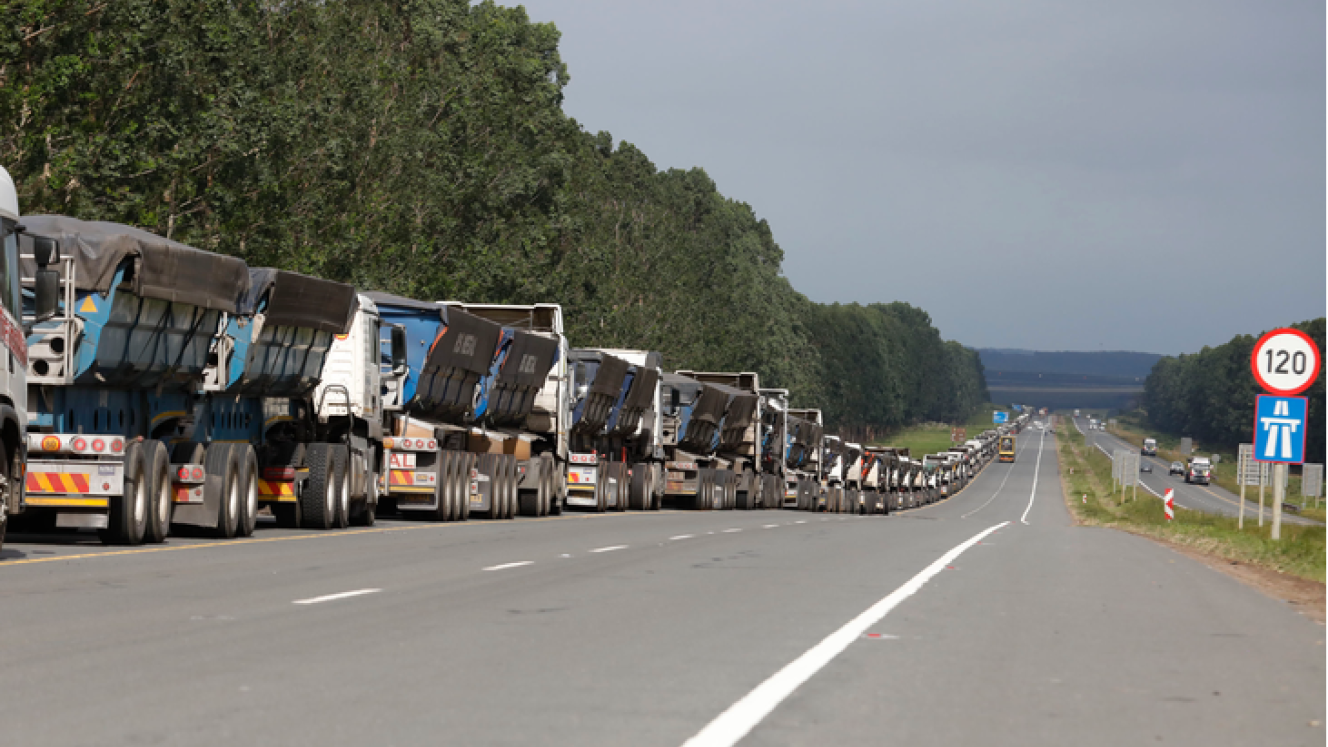
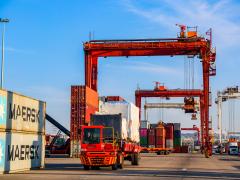
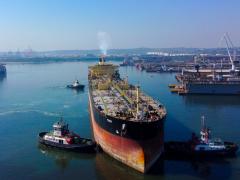
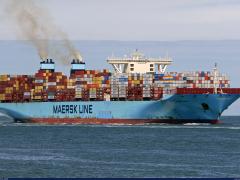
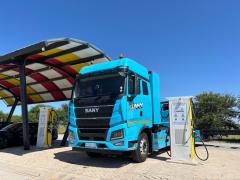
Maersk Line schedules reflect changing market conditions JOY ORLEK GLOBALLY AND locally the landside leg poses one of the greatest challenges to a seamless logistics chain, with road and rail infrastructure falling short of demand as cargo volumes continue to escalate. Maersk South Africa has addressed the issue head on with the launch of its new road train product on the Durban – Johannesburg – Durban leg. “We’re putting 40 trucks a day on the road – and this not only addresses the shortage of rail capacity but ensures that we meet our customers’ Just in Time requirements, getting key shipments road-hauled straight to Johannesburg,” says Cape Town-based national sales director of Maersk South Africa, Mark Cairns. These are the kind of interventions that are critical to maintaining a smooth supply chain as demand outstrips supply at every stage of the process. Globally, infrastructure upgrades have not kept pace with growth. “The foremost challenge facing local industry is the issue of port congestion, which is a global issue,” says Cairns. “Many ports worldwide are in the process of expanding and developing infrastructure to accommodate the overwhelming growth in trade, but volumes are increasing at a faster pace than infrastructure improvements are being implemented. “The resulting port congestion leads to delays which are costly to the supply chain, logistics providers and their clients.” Maersk South Africa is encouraged by Transnet’s proposal to embark on a port expansion project for Durban with investments totalling R4.5bn, says Cairns. “Transnet and the National Ports Authority (NPA) clearly have a genuine interest in getting things to work more efficiently. The development of the new container terminal at Pier One, which began operating last month (May), is evidence of their commitment.” But the challenge of infrastructure underperformance is further exacerbated in South Africa by seasonal peaks, says Cairns – and these pose an enormous challenge to the shipping industry. “There are two peaks that have a dramatic effect on South Africa’s shipping capacity – the fruit and vegetable peak at the beginning of the year and the build-up to Christmas, when retailers start stocking up in anticipation of the seasonal high sales-period. During the rest of the year the supply and demand are better balanced as more capacity has come on line.” These are the kind of issues that demand proactive response from service providers to ensure a smooth supply chain for customers. Maersk Line, for example, has responded with significant changes to its scheduled services. “We’ve seen huge growth on the Far East route and will be deploying increased capacity on the first and second string as well as greater coverage into key markets in Asia,” Cairns told FTW. But capacity challenges are not limited to the growth in new markets – the conversion of breakbulk to containerised traffic is adding to the mix. And it’s a growing trend that has gathered momentum particularly over the past 5-10 years. “Going back 10 years there was a bias in favour of breakbulk. That’s now moved to a more balanced picture in favour of containers as the supply chain has become increasingly sophisticated. “It enables the shipper to flow the goods into the market more effectively – rather than land large quantities of product which tends to depress price.” But with less frequency of conventional vessels, the capacity on container carriers is further stretched. And with limited capacity and growing demand, managing these assets as effectively as possible is critical, with technology playing a key role. “It’s the cornerstone of the company’s business,” says Cairns, “and by deploying effective innovation Maersk Line is able to provide customers with a constant view of their cargoes. We focus on end-to-end solutions that offer a more integrated and more cost-effective approach. “The success of getting cargo from door to door safely and on time depends largely on getting the paperwork right. Maersk Line uses an extensive e-commerce product suite and preaches the benefits of electronic information sharing to its clients.” At the same time, it has put in place a number of processes to increase internal efficiencies. “This helps to strengthen our customer proposition in the market place." Sister company Maersk Logistics South Africa offers a package of solutions for all supply chain management and transportation requirements says Cairns. "The company has over 200 offices in more that 90 countries worldwide and offers a growing range of consultancy services geared to help its clients optimise their supply chains.”
‘Road train’ addresses landside logistics challenges
Comments | 0
© Now Media. This content is protected by copyright and may not be adapted or republished. If you would like to discuss cooperation opportunities, please contact: editor@freightnews.co.za.