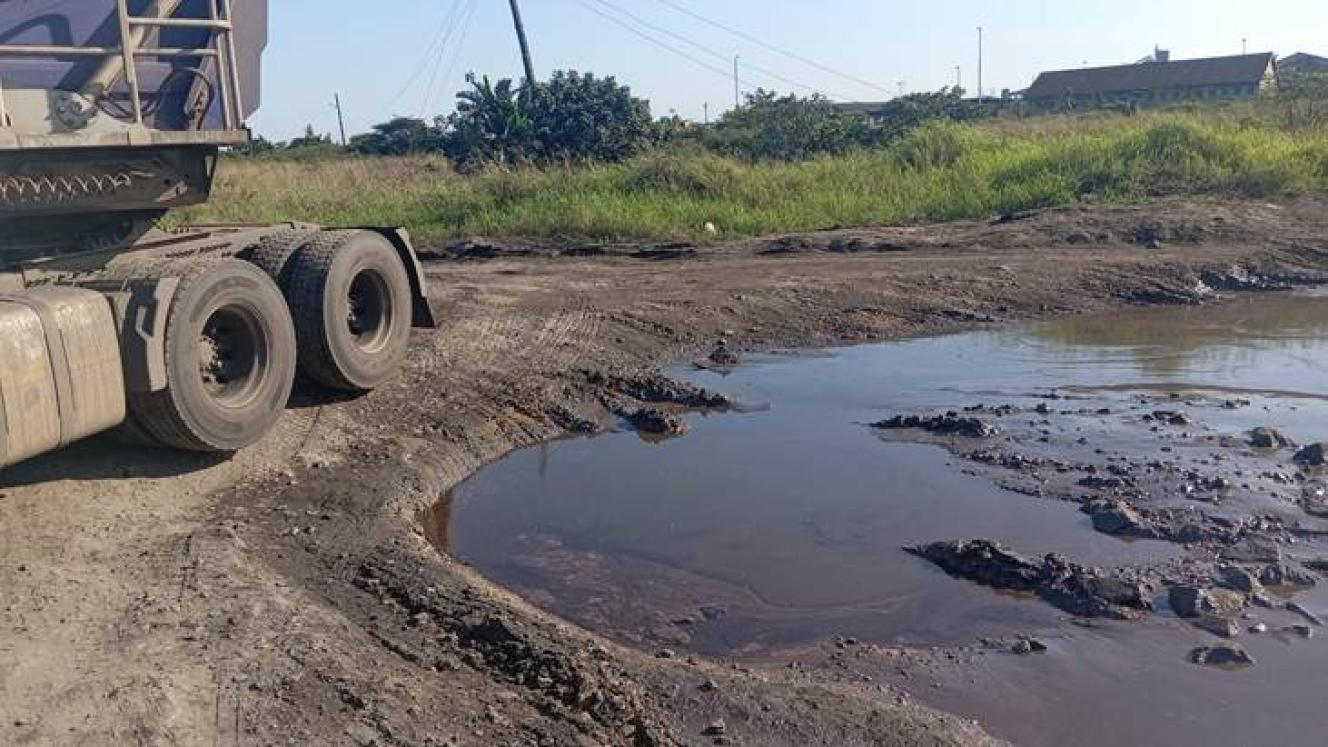
Plenty of talk but little action … is there any hope for rail and some relief for our overloaded road infrastructure? TERRY HUTSON takes a closer look. TERRY HUTSON ‘WE HAVE a problem’, exclaimed last year’s Road & Rail Transport feature headline. One year later it might be said there’s still a problem – maybe several of them. And they’re probably the same as a year ago. One of these stems from the fact that in South Africa we have little in the way of really accurate, usable statistics to indicate the true value of freight hauled by either road or rail transport. The result is that one listens to arguments presented by lobbyists from each sector while remaining as ignorant of the real facts as the lobbyists sometimes are. This criticism unfortunately extends through the private and semi-private sector to government level in the Departments of Transport and Public Enterprises, and to Transnet and its subsidiary Spoornet. All of them ought to have accurate data on which to base plans and strategies. An example is the difficulty in uncovering the exact volumes that are conveyed by road or rail between the two most important economic centres, the Durban – Gauteng corridor. At a transport conference held last year delegates were told the corridor carried 62 million tonnes (mt), of which 9mt was by rail and 53mt by road. These figures were then used as a basis to debate the merits of government spending on road and rail infrastructure. Spoornet and the CSIR however produce differing figures of 9.7mt and 44.7mt respectively, whereas the RailRoad Association (RRA) maintains there is actually 17mt of rail freight moving along the KZN mainline. The difference lies with about 50% of this additional volume not completing the full journey i.e. it is forwarded or received at points in between. The RRA notes that the same principle applies to road traffic and estimates that only 20mt of end-to-end road freight takes place – less than half of the quoted figure of 44.7mt. These same arguments apply to other transport corridors. Unfortunately none of the figures are reassuring in their accuracy. What is not in dispute is that Joe Public has to put up with increasing numbers of heavy-duty road vehicles clogging the roads he wants to use. He hears stories of corruption, overloading and other skulduggery concerning the road transport sector but never really knows the merits of these claims. At the same time he will read in his FTW or newspaper of gross inefficiencies involving rail transport, and he will learn of horrific rail accidents for which he will seldom if ever receive any explanation of why they have happened. Until everyone has access to proper studies that reveal accurate statistics it will be difficult to determine just how much new infrastructure is required. Do we really need new road systems, and what improvements to rail are necessary? Which is why it is worrying to hear of feasibility studies being conducted into building a dedicated ‘broad-gauge’ line between Durban and Johannesburg with trains capable of speeds in excess of 160 km/h. What makes these reports doubly concerning is that independent studies suggest the main Durban-Gauteng rail corridor is about 65 % underutilised. Sources within Spoornet reveal that the rail company currently runs an average of 23 trains a day along the KZN mainline, compared with a capacity of 120 trains. Even making allowances for routine occupation of the line for maintenance, this equates to a capacity of 112 trains a day. One result of this underutilisation of rail is heavily congested road networks, particularly in the Durban port area, leading to frustration and anger among the general public, city authorities and in particular, the road haulier who finds his income severely restricted by the resultant delays. Rubbing salt into the wound must surely be the sight of adjacent railway lines, quiet and disturbed only by the occasional train. It’s been said that the reason why government wants a high-speed train is to improve the turnaround of container and other freight trains between the two centres and so to reduce the ‘cost of doing business’. Someone must tell government/Transnet/Spoornet that the problem is at each end, not in the middle. The delays are at King’s Rest and City Deep, not with the time each train takes to navigate the journey, and cutting a few hours from the journey won’t make any difference. It’s the days spent at each destination that are the problem. There is ample evidence that it takes a lot longer to get the containers off a train at King’s Rest than it does to rail that trainload from Gauteng. Of course there are those who say that Spoornet lost the plot years ago, when it went the route of centralisation and lost touch with local customers. That was long before the present management structure and it may be too simplistic, but it is true that the move coincided with road transport taking the lion’s share of the freight market of which it hasn’t let go since. In fact the road transport sector is very good at retaining its market share and uses its flexibility to good effect. The loss of Spoornet chief operating officer Marinus van Onselen this year after less than a year in office didn’t inspire much confidence either. Van Onselen came to Spoornet to take over the operating side of the rail utility. He came with a great reputation – despite his name he’s an Australian Dutchman and not a local. His departure was as quick as his arrival and with less fanfare, but the word from the inside is one of frustration over getting things to change. That’s an old and familiar story at Spoornet. On the more positive side, Maria Ramos confirmed during August that Transnet would inject R64.5 billion to upgrade infrastructure in its various units over the next five years, and more than half of that – R34.1 bn – would be for the account of Spoornet. She said the plan was to increase Transnet’s share of the freight business from about 10% to 25% within five years. Much of this expansion will come from containerised and auto traffic, and Spoornet’s total freight capacity would increase by between 20% and 25% in that period. She acknowledged that rail was cheaper than road transport but speed was the real challenge. It must be hoped that by that she didn’t mean trains racing each other at 100 mph!
Road is winning as the debate rages on
Comments | 0
© Now Media. This content is protected by copyright and may not be adapted or republished. If you would like to discuss cooperation opportunities, please contact: editor@freightnews.co.za.