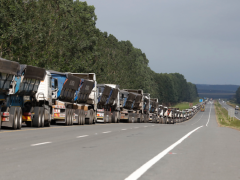
AFRICAN MINES have generated staggering demand for project cargo shipments into Zambia and the DRC and beyond, with much of the materials and equipment sourced from or transhipped through South Africa, Caroline Brownson of SDV’s project cargo division told FTW. Many of these projects have large steel-supply requirements but the cost of steel in SA means that the metal needs to be sourced from further afield. “Often a project’s steel needs take up 30% of its total cargo requirements,” says Brownson. “The supply of steel in South Africa has taken a few knocks in the last year, which has driven up the local price. We’re now sourcing from the Far East because it is cheaper, even with the cost of freight, so you end up forfeiting those volumes. “95% of this division’s time is spent working for the mines throughout Africa, and our extensive footprint is a big factor in our success,” Brownson said. The company concentrates on the construction phase of each, which can take between 12 and 18 months. “It is important to understand the size and scope of the business and align your resources to meet these requirements, be it vehicles or human resources. We also pick up a lot of the ongoing supply business even after the project has concluded.” The availability of vehicles to the DRC is one of the main obstacles for Brownson. “The hauliers are subject to difficult road conditions and border congestion, and so opt for alternative routings instead where there are quicker turnaround times and fewer delays.” Stringent import procedures are another challenge when servicing the mines. “Fortunately, we have a strong SDV presence at the borders en route, so this helps ease the flow of vehicles through these posts,” Brownson added. SDV’s Durban office specialises in the abnormal movement of earthmoving equipment in transit to mines in the DRC. “DCP and Tenke Fungurume are two big projects for us, with more than 250 abnormal loads as well as over 100 motor vehicles each month into the Copper Belt and DRC,” Brownson added. “A key element to sustaining a project division is ensuring you have three major projects running at the same time, in different phases, right from tendering to inception and management and onto the final reconciliation phase and the closure of the project,” Brownson said. “We believe our networking and footprint has secured our position in the Africa project market.”
Road hauliers in short supply on hazardous DRC route
Comments | 0
© Now Media. This content is protected by copyright and may not be adapted or republished. If you would like to discuss cooperation opportunities, please contact: editor@freightnews.co.za.