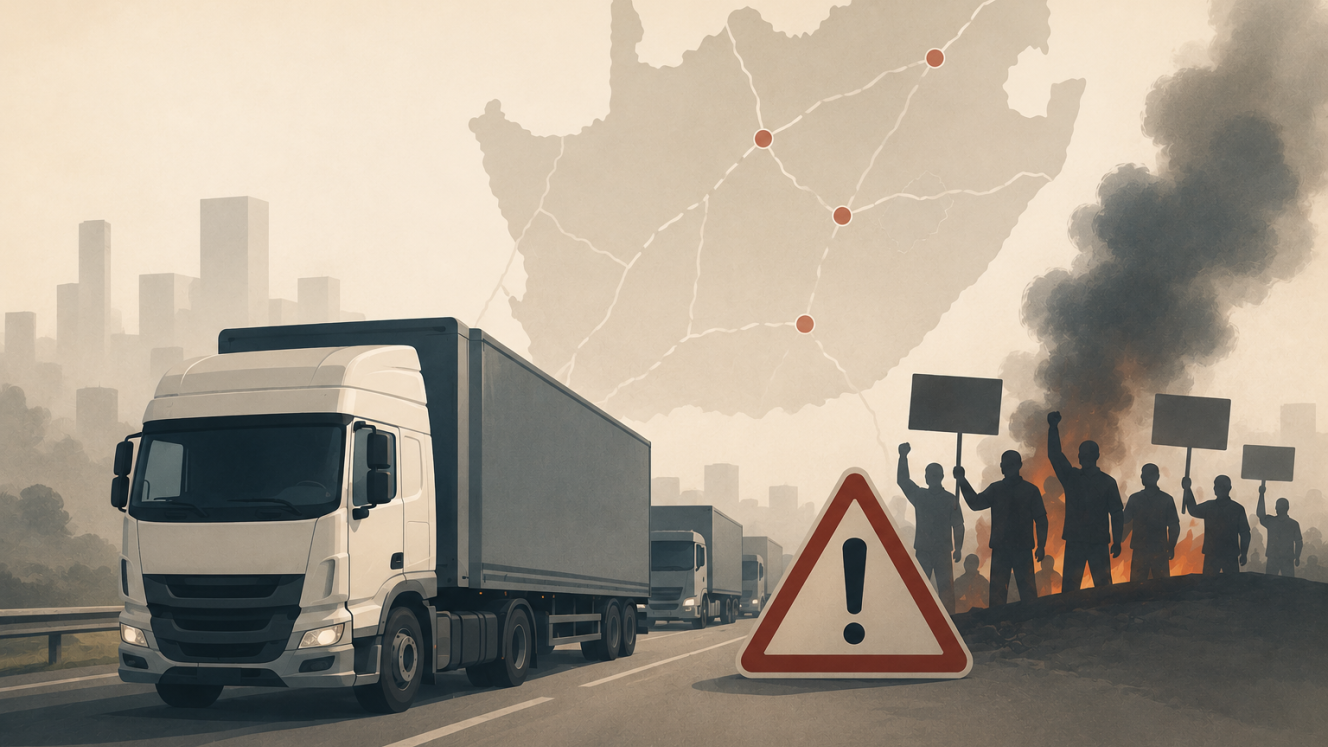
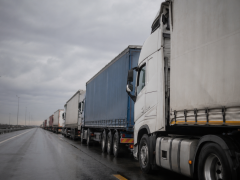
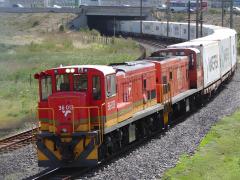
The South African Road Federation (SARF) has called for the construction of a dedicated, heavy vehicle road facility between Durban and Johannesburg. SARF executive director, Malcolm Mitchell, says this route is by far the most important corridor in South Africa for the transport of general freight cargo. “Currently, more than 80% of freight is transported on road. This translates to 36 million tons per annum being carried on the N3, and the volume is expected to double within 12 years to 72 million tons. It is evident that additional capacity is urgently required,” he said. Transnet is spending many billions of rand to win back its “market share” on this route. Mitchell says this would probably not be the best way to relieve the congestion and safety problems on the N3 highway between Johannesburg and Durban. “The SARF suggests that this planned, heavy investment in rail on this route is not the most economic solution to the problem, even if rail could induce shippers to return to rail with all its previouslyshown delivery problems. Worldwide, and in South Africa, he said, rail rarely pays for its infrastructure costs – whilst road can always do so if required, he said. Regarding the environment, monetary criteria for measuring this show that the impact of rail is 25% or so of the road impact – in other words, rail is better. However, environmental costs are generally 15 to 25% of the total lifetime costs of creating new transport capacity, so rail’s environmental advantage is rarely sufficient to compensate for its very low benefit to cost ratios. A dedicated truck route for the Johannesburg to Durban corridor could cost some R30 billion. This would create capacity for about double that currently being conveyed on the existing N3 route. A toll rate of R4 per kilometre for heavy vehicles could cover a substantial proportion of the capital, maintenance and operating costs over 30 years. Such a toll rate could be affordable because a dedicated truck road could be operated at far lower vehicle operating costs than at present. This would become possible with purpose-designed trucks carrying much higher payloads than at present – but on similar axle loadings. Additional economic benefits would include muchreduced maintenance costs, as well as increased capacity and improved passenger vehicle safety. “Further economies would result if rail investment earmarked for capturing road freight business was diverted to areas where rail transport is really economic, such as coal and other bulk carrying capacity.” Regarding the rail option, Transnet has quoted an investment of between R10 billion and R60 billion to develop its general cargo business. For the Johannesburg to Durban corridor, SARF estimates that over a 10-year period, this might amount to some R30 billion spent on rolling stock, infrastructure enhancements and port and inland terminal development. This excludes any operational cost support that may be required to ensure services could be offered at prices that would compete with road, said Mitchell. Basically, the facts are that a R30 billion investment over 10 years in road would buy a capacity of 72 million tons per annum for road, but only 24 million tons for rail.
Road body reiterates call for R30bn truck route on Durban corridor
Comments | 0
© Now Media. This content is protected by copyright and may not be adapted or republished. If you would like to discuss cooperation opportunities, please contact: editor@freightnews.co.za.