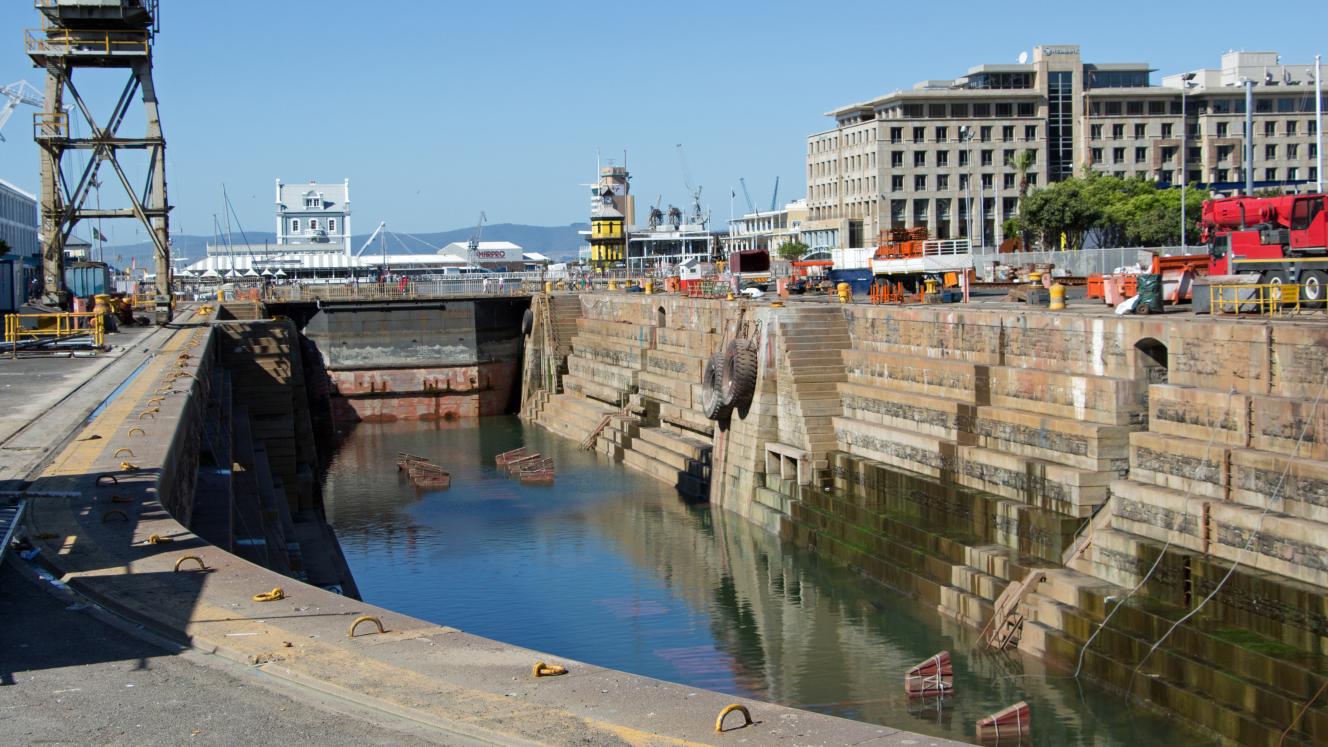
Good news for Richards Bay stakeholders is that Transnet intends continuing with the refurbishment of the dry bulk (DBT) and multi purpose terminal (MPT) despite the economic downturn which is resulting in sharp drops in terminal volumes. This was revealed recently during a series of countrywide roadshows in which Transnet Port Terminals (TPT) indicated its intention to continue with existing projects aimed at upgrading and improving terminal capacity. In the case of Richards Bay some R800 million of refurbishment is under way or planned, including the maintenance of existing infrastructure and equipment. Solly Letsoalo, TPT’s chief operating officer said that while Transnet could only guess at how much longer the downturn would last, the organisation had nevertheless made the decision to continue with countrywide upgrades because it understood the need to have spare capacity for whenever the economy started recovering. He explained that at Richards Bay this was despite some commodity volumes having decreased by as much as 30% since October 2008. He said the resultant slump did offer opportunities of taking equipment out of service for necessary maintenance and generally to prepare for a recovery by improving terminal capacities. But importantly Letsoalo said the emphasis on achieving this included recognising the need to address issues of productivity, while also introducing a programme of maintenance and refurbishment of older equipment. TPT currently has the capacity to handle 13 million tonnes of cargo at Richards Bay MPT and DBT which it intends increasing to 21mt without having to expand either the port or terminals. TPT believes the two terminals can in fact be extended beyond 21mt to handle up to 35mt annually without any additional expansion. Letsoalo said this could be achieved by way of improving productivity, installing new and more efficient conveyor systems and building additional concrete slabs for the handling of dry bulk commodities, while also dividing the dry bulk berths into a system of separate specialist import and export facilities which would encourage specialisation. In addition certain low volume dry bulk commodities will be transferred to the MPT where there is some spare capacity, allowing DBT to focus on fewer high volume commodities. There is also an urgent need to bring both terminals back into profit, Letsoalo said. The main focus on achieving this would be through improved productivity, increasing ship turnaround time with generally improved loading rates and through the introduction of a programme of planned maintenance which is aimed at reducing timeconsuming mechanical breakdowns on equipment. To help achieve these targets TPT has appointed teams to address each sector and identify ways and means of bringing about improvements. In terms of equipment TPT has six ship unloaders of which two are new and the balance is undergoing a programme of refurbishment. Letsoalo said the cost of refurbishing a ship unloader was approximately 30% that of buying a new machine. Both terminals are also equipped with a fleet of mobile canes During the 2008/09 financial year ended 31 March the port of Richards Bay handled a total of 82.73 million tonnes of cargo. The larger share of this was export coal, of which Richards Bay Coal Terminal (RBCT) logged exports of 61.79mt, which was down 6.6% on the 66.16mt of the previous year. In 2008 Transnet Freight Rail delivered a total of 62.66mt of coal to the terminal despite several delays caused by derailments along the line. RBCT says the intention remains to ramp up exports to 76mt a year with further extensions taking this to 91mt a year . Mining analysts are however sceptical about whether these figures can be achieved in the short term. On the ship repair side there is still no news of the proposed dry dock and ship repair facility that a local BEE company plans to introduce with the backing of Chinese interests. Transnet says it has the matter under consideration but a decision has remained pending for several years and analysts are again sceptical whether this project will get off the ground in the foreseeable future.
Richards Bay upgrades forge ahead despite recession
Comments | 0