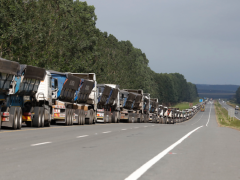
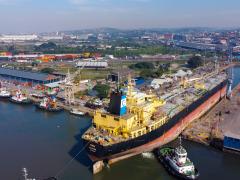
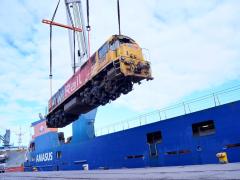
Red tape and nontariff barriers are strangling trade despite port, rail and road infrastructure all along the southern African coast from the new Viana terminal 12 kilometres south-east of Luanda in Angola in the west to the new deep water port of Lamu in Kenya to the east. On paper shippers are spoiled for choice as investment opens up the harbours and improves efficiencies when it comes to the physical movement of containers and bulk. The introduction of electronic clearing should also be reducing the cost of doing business and speeding up the movement of goods. However, according to the 2014 World Bank “Doing Business in 2014” report, governments continue to introduce new regulations which slow down the movement of goods. While technically electronic clearing can be done from anywhere in the world, the constant changes mean that there is still a need for local clearing agents, and that a presence is required at the ports of entry and borders. For shippers and their logistics suppliers this means that the nearest port geographically may not be the most efficient and costeffective choice. South Africa’s ports remain competitive because the government has continued to reduce the time and documents required to export and import through its ongoing customs modernisation programme, according to the report. Customs does not make it easy, however, as attested by a number of importers in Zambia and Zimbabwe interviewed by FTW over the years. The World Bank ranks South Africa at 106th in the ease of trading across borders – out of 189 countries. Angola is ranked 169th; Namibia 141st; Mozambique 131st; Tanzania 139th and Kenya 156th. Top performer by far of the countries in the southern Africa group is Mauritius, which is ranked 12th in terms of cross-border trade and 20th in overall ease of doing business. Shippers and logistics companies will be monitoring developments as countries in the region either gear up to facilitate trade through the ports or put the brakes on cargo movement. Mozambique is cited as having made trading across borders easier by implementing an electronic single-window system. Neighbouring Swaziland, which serves as a transit route for cargo being carried between Maputo and other countries such as South Africa, Zimbabwe and Botswana has also made trading across borders easier by “streamlining the process for obtaining a certificate of origin”. In contrast, Tanzania has made importing more difficult by introducing a requirement to obtain a certificate of conformity before the imported goods are shipped. On the opposite side of the continent Angola has increased documentation requirements for crossborder trade by introducing a mandatory registration for all traders and a new licence for export and import transactions. This at a time when the Angolan government is investing millions of dollars in reviving the Benguela rail line between Zambia and the port of Lobito. Other factors influencing the cost of transport are property prices. Namibia, for example, while expanding the port of Walvis Bay and the Walvis Bay Corridors, in 2013 raised the cost of property transfer for businesses. At the same it made transferring property more difficult by requiring conveyancers to obtain a building compliance certificate beforehand, according to the report. It takes an average of 178 days to register a property in Namibia (the worst performer in the region) compared to 41 in Botswana and the average of 111 days. Logistics companies which already have warehouses or the land required for warehousing and related activities are therefore in a stronger position than those wanting to expand their presence in the market. Another major factor to be taken into account when selecting a port gateway for imports and exports is the cost added by corruption – not only in bribes, but also in delays. Of the port countries in the region, Transparency International’s 2013 Global Corruption Index ranks Angola at 153 out of 177 countries evaluated; Namibia 57; South Africa 72; Mozambique 119; Tanzania 111; and Kenya 136.
Regulations counteract benefits of infrastructure upgrades
Comments | 0
© Now Media. This content is protected by copyright and may not be adapted or republished. If you would like to discuss cooperation opportunities, please contact: editor@freightnews.co.za.