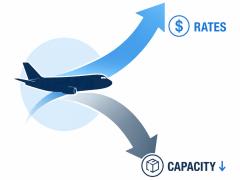
Small transporters are struggling to make ends meet as volumes and rates still have to improve to prerecessionary times. “In theory one would think a cross-border operation to the DRC would be a very profitable option for a transporter, but as small operators we just cannot compete with the big volume-based companies any more,” says Andre van Huysteen, owner of Boksburg-based trucking company Vanito Trading. Before the 2008 global economic downturn transporters would easily get up to R75000 for a one-way trip to the DRC, and be able to make at least another R40 000 with a return load. Those days, however, are long gone. With rates in the region of about R45 000 at present, transporters are struggling to make ends meet seeing that the cost of a round-trip to Lubumbashi is in the region of R65 000. If the transporter is lucky enough to pick up a return load (bringing in about R40 000) he can still manage to make a slight profit of about R25 000 on a trip. “If one takes into account that a round trip to the Congo takes a minimum of a month, theoretically it means a transporter is making R25 000 for each of his rigs,” says Van Huysteen, who runs four rigs at present. “But that is before the bank instalment on that truck is paid, which will come in at around R20 000, leaving you with about R5 000. All of this is also dependent on a smooth trip with no breakdowns and no bribes having to be paid and no delays.” If a company is running 400 trucks it becomes a viable business but small transporters with only four or five rigs are finding it hard to remain competitive and stay afloat. “We just can’t do it anymore,” says Van Huysteen. “We have to pay at each border post for a number of extras ranging from permits to income taxes. Diesel alone will cost about R27 500, another R10 000 for the driver, at least R25 000 for toll fees and then some. In Zambia, for instance, you can pay up to $30 000 for a permit for over 53 tons. The costs are high.” Van Huysteen says with rates at present often at least half of what they were before the recession, more and more small transporters are facing the reality of no longer running cross-border operations.
Rates squeeze
Comments | 0
© Now Media. This content is protected by copyright and may not be adapted or republished. If you would like to discuss cooperation opportunities, please contact: editor@freightnews.co.za.