What has been one of the worst
years ever for the liner shipping
trade is over. Will 2017 be
better?
The fortunes of the shipping
industry in 2017 seem to be
something of a mixed bag
across the sectors, according
to Glenn Delve, national
commercial director of MSC.
And reading the previous
year’s economic indices is a vital
part of assessing the prospects
for the shipping industry in the
year ahead, said Peter Besnard,
CEO of the SA Association of
Ship Operators and Agents
(Saasoa).
Those he rates as most
applicable are: world economic
growth; global commodity
production; global industrial
output; and the performance of
the economy of China.
“These factors can affect
the importing and exporting
activity of the countries –
effectively the market demand.
On the other hand, expected
newbuilding deliveries and the
demolition activity affect the
supply – the second indicator of
the market equilibrium.”
Delve pointed out that the
International Monetary Fund
(IMF), in its World Economic
Outlook, had forecast global
growth at just 3.4%, with
prospects differing sharply
across countries and regions.
An instance of this, he added,
was emerging Asia and India
showing robust growth
but sub-Saharan Africa
experiencing a sharp slowdown.
The growth was reflected
in the fact that the Chinese
economy had a slight
improvement (GDP from 6.5%
in 2015 to 6.6% in 2016), a
little higher than the initial
expectations. And part of the
slowdown was apparent in the
gross domestic product (GDP)
growth predictions for SA in
2017, which vary from a meagre
1.1% to 1.8%.
Although all market
indicators seem to be better
in 2017, according to Besnard,
the economic environment still
remains foggy, mainly due to
the uncertainty in the Chinese
and Indian economies and the
relevant economic policies in
these two countries.
How do these indicators
affect shipping?
“Both the advanced
economies and the emerging
markets are expected to
experience a higher growth
rate than in 2016,” Besnard
told FTW. “The highest
improvement is expected to
take place in the US, Russia,
Canada, SA, Latin America
and the Caribbean. India’s
growth is also expected to be
higher than in 2016 but its
economy has been affected by
the demonetisation effect due
to recent governmental policies
– and the long-term impact of
this policy has not yet safely
been evaluated; therefore, the
overall economic environment
of India still remains cloudy.”
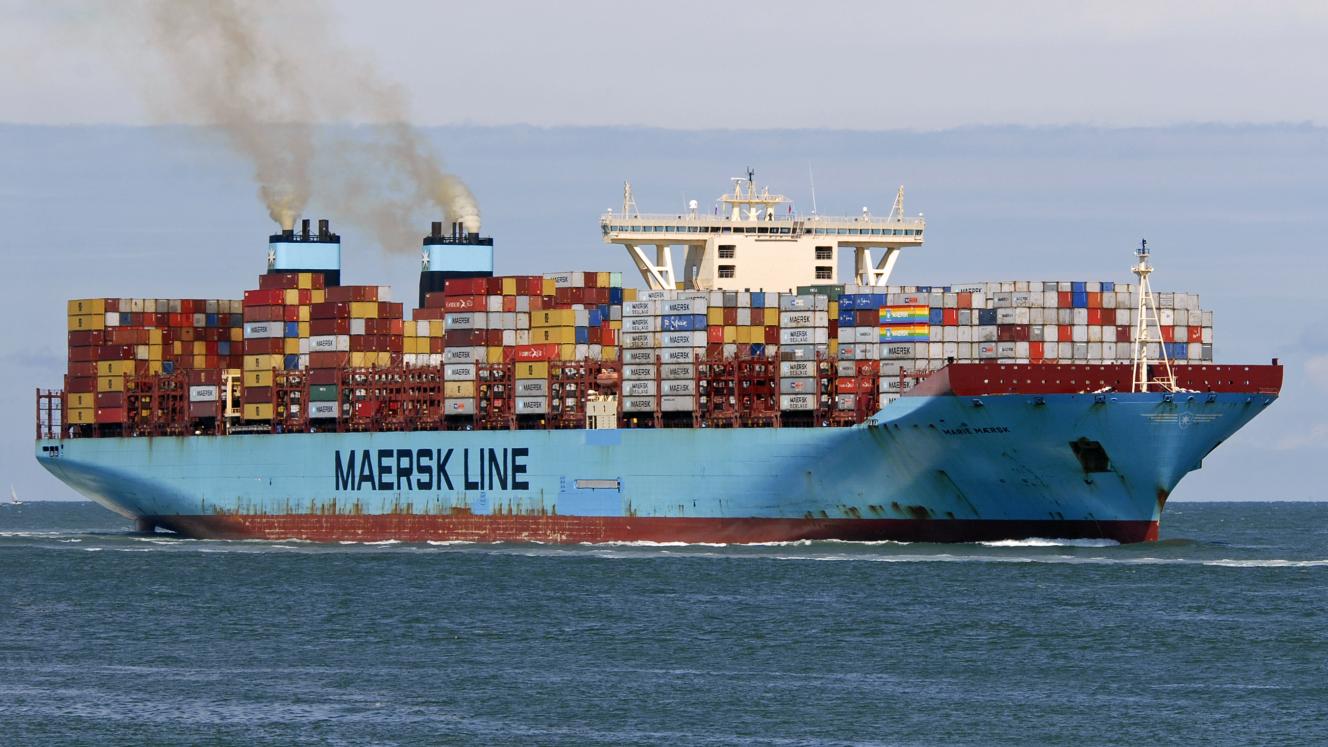
The container shipping
sector has been through a
dreadful year, according to
Delve, evident in the mergers
and acquisitions, a major line
collapsing and the formation
of alliances between shipping
lines.
And, Besnard added, the
merger &
acquisition
(M&A) activity
was expected
to continue to
play out during
2017, with
K-line, MOL
and NYK
already having
indicated that
they would
merge in the
second half of
the year.
That’s
effectively removing two
shipping lines from the trade,
and automatically lowering the
available capacity, he said.
“And,” added Delve, “if
trends continue, there will
surely be more revitalisations
and mergers.
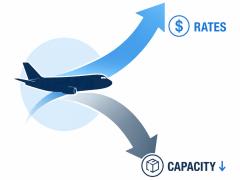
What he sees as “the
paradox” is that rates will
increase despite shipping
over-capacity continuing to
be severe in 2017. “But factors
such as the higher prices of fuel,
the previously unsustainable
level of rates and the Hanjin
bankruptcy are now weighing
heavily on pricing,” he added.
Delve also revealed that,
since mid-November 2016,
MSC had seen “a sizeable
uptick” in the export of
containerised minerals such
as ferrochrome, chrome,
manganese and copper to
China, for steel-making and
other forms of manufacturing.
And he expected this to
continue until the end of
March.
At the same time, the UK/
North-West Continent (NWC)
trade is a stable, moderate
growth trade with some
increases in tariff rates.
He also
expected the
North America
trade to remain
stable with a
good flow of
traffic and a
possible 5%
increase in
volume on
these trade
routes. “But
little trade
growth is
expected from
the South
American routes,” Delve said.
That left what he termed
“the wild card” of Asia and
China, where he expected
container volumes to grow by
10% to 12%.
INSERT
The economic
environment still
remains foggy, mainly
due to the uncertainty
in the Chinese and
Indian economies.
– Peter Besnard
Rates likely to rise despite continued overcapacity
Comments | 0
© Now Media. This content is protected by copyright and may not be adapted or republished. If you would like to discuss cooperation opportunities, please contact: editor@freightnews.co.za.