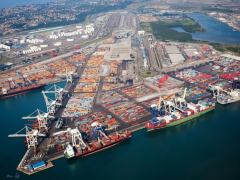
TERRY HUTSON THE RECENT statement by Transnet head Maria Ramos to the Cape Town Press Club that Spoornet was looking into a new high-speed wide-gauge railway between the port of Durban and Johannesburg has left many port and rail users puzzled. According to Ramos the existing main line, South Africa’s busiest, limits the scope for greater speed. She said a round trip between the port and Johannesburg took between 2.5 and 5 days, and faster turnaround times would make it easier for large rail customers like Toyota and Ispat/Iscor to meet their deadlines. Rail users could tell the head of Transnet that the problem lies at City Deep, and not on the line itself where actual travelling time seldom take more than 12-15 hours for a one-way journey. Regular rail and port users will also be puzzled with Spoornet’s sudden fixation with speed, and also a statement that said a new dedicated line would allow trains to Ôpass each other’. Someone should inform them trains do this already - the line has been doubled for decades! Someone should also tell Ramos that the problem with train services from the port to Durban is not on the existing railway, which an independent but official study commissioned by the KZN Department of Transport found was only 35% utilised, but with delays at City Deep once the train had arrived. It seems every shipper knows this, except Spoornet and Transnet! The KZN study, published this month in the KZN White Paper on Freight Transport, says the main line could handle a far higher proportion of long-distance freight, in particular containers, if equipment and systems were upgraded. It doesn’t call for a new line to be built at enormous cost. The White Paper correctly identifies that historical investments in rail infrastructure Ôhave resulted in under-utilised facilities in many areas, at current levels of traffic.’ Where there is need for additional capacity, it says, is the Richards Bay coal line, which is operating at approximately 85% of capacity and requires continual upgrading simply to match demand. As a result of the inability of this line to handle additional traffic South African coal producers are forced to turn away lucrative contracts that also cost hundreds of much needed jobs. More than 75% of imports and exports for the whole country and the region pass through KZN. National transport minister Jeff Radebe, who attended the launch of the White Paper in Pietermaritzburg, made it clear the solution lay not with building new roads, railways or ports, but with sustaining existing services through improved maintenance of existing systems.
‘Ramos rail plan misses the point’
Comments | 0
© Now Media. This content is protected by copyright and may not be adapted or republished. If you would like to discuss cooperation opportunities, please contact: editor@freightnews.co.za.