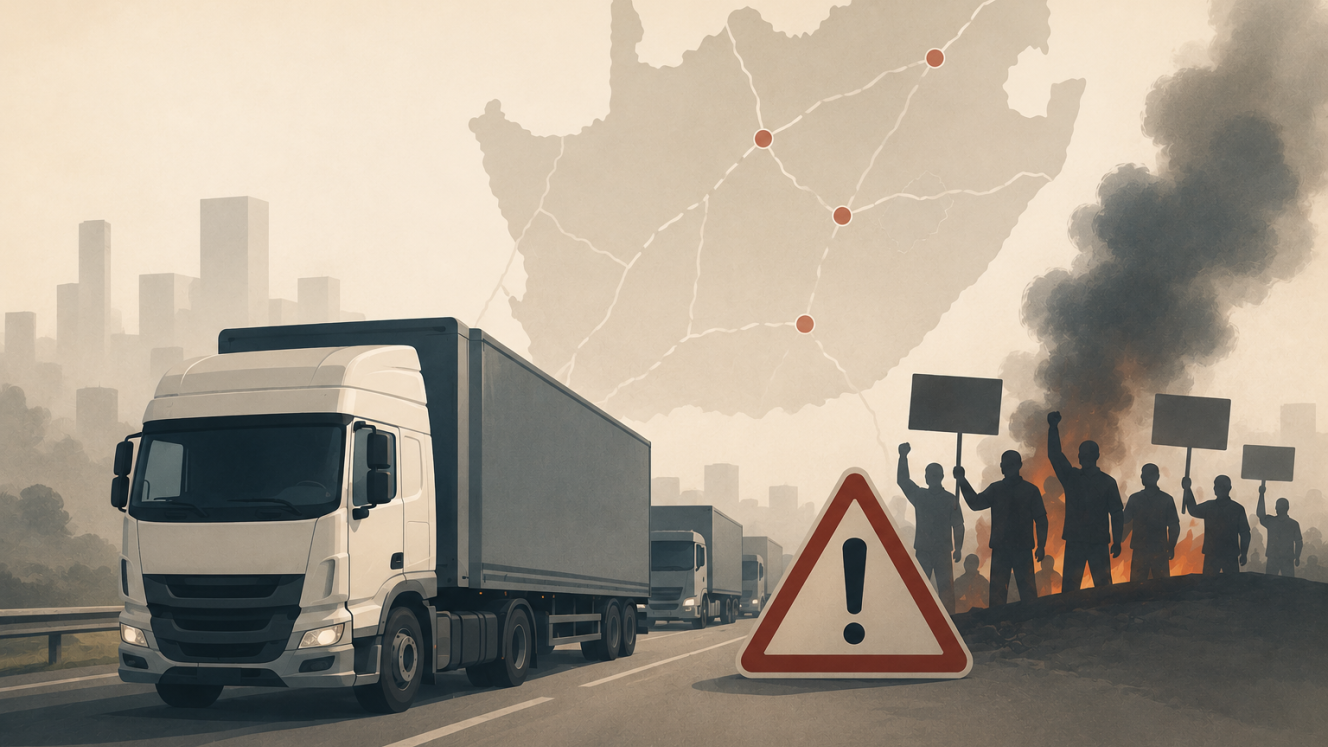
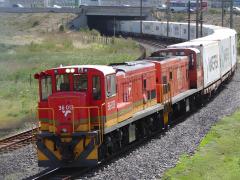
Volumes grow by 16% ALAN PEAT THE PERENNIAL “rail versus road” debate has again favoured road, with rail taking a hammering, according to Lawrie Bateman, MD of MSC Logistics. However, he told FTW, the rail services must be given credit for trying to address the problem. Indeed, Spoornet’s corridor-based operational model IMEX - with a fixed train-scheduling plan on the Durban/Johannesburg route - has been finalised and benefits can now be seen, Bateman added. “This has resulted in our volumes on rail increasing 16% to date compared to the same period in 2003,” he said. “We are also experiencing improved service levels on the Cape Town/Johannesburg route which our company has been using over a number of years.” Regrettably, however, it seems that the IMEX system will benefit the major corridors only. This, said Bateman, showing in a significant reduction in service options offered by railways - particularly on minor routes. “This is compounded by a serious decline in infrastructual maintenance and development,” he added. “It is well known that, in certain circles of government, there is a desire to influence rail transport over road as meaningful benefit would be derived from better utilisation of the national rail asset. “In spite of this desire there is no quick fix on the horizon due to massive investment requirements.” Bateman suggested that - in order to compete with professional road transporters - the rail service should follow two guidelines. First, it must improve cost-effectiveness. “This,” he said, “would reduce the heavy rate increases imposed over the last few years.” Secondly, it must offer an efficient, predictable service which is responsive to market needs. “Overall,” Bateman said, “what is required is an increased private sector involvement in both investment and operational strategies, for Spoornet to arrive at an acceptable solution to the problems users of the service are currently experiencing.”
Rail initiatives benefit major corridors
Comments | 0
© Now Media. This content is protected by copyright and may not be adapted or republished. If you would like to discuss cooperation opportunities, please contact: editor@freightnews.co.za.