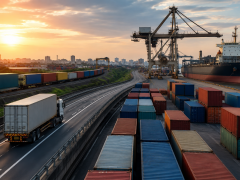
Today more than ever economic pressures – higher fuel costs and reduced volumes – make it imperative to improve ocean supply chain operating efficiencies. “Adoption of e-commerce systems utilising global standards and accessible, transparent data will help shippers optimise their ocean supply chains,” says INTTRA’s VP product management, Ivan Latanision. “As global supply chain collaboration with trading partners advances, the ocean shipping industry will benefit from more streamlined, successful ocean supply chains.” INTTRA, the global multi-carrier e-commerce shipping platform, streamlines and standardises the common processes and transactions involved with container shipping, says Latanision. “The use of e-business provides a more efficient way for trading partners – shippers, carriers, logistics service providers, customers - to interact to streamline processes, reduce errors in documentation and improve data sharing to offset escalating shipping costs.” In many cases inefficient manual processing of hard copy, paper documents is the norm, says Latanision. “The INTTRA e-commerce option is a low cost, accessible technology tool that provides for a faster, streamlined document flow.” One example of an INTTRA data sharing tool that was announced recently, says Latanision, is I-Link BL Data. “It’s the first multi-carrier Bill of Lading (B/L) data service to reduce or eliminate the need for shippers, forwarders and importers to rekey B/L data into their ERP or Shipment Management Systems. “I-Link BL Data delivers early access to actual shipment details at the time the carrier generates the Bill of Lading to expedite financial processing, freight audit and distribution planning applications. It enables automation of Minimum Quantity Committed (MQC) and “open to buy” calculations. In addition, INTTRA’s secure distribution logic protects the confidentiality of sensitive charge information. Because of these advanced features, many key carriers choose INTTRA as their exclusive channel for distributing B/L data to their customers.” The adoption of standardised electronic processes for ocean shipments in markets around the world will continue to grow, advancing the quality of communication and ease of data transfer throughout the global supply chain, Latanision added.
Quest for greater efficiency will continue to push e-commerce
Comments | 0
© Now Media. This content is protected by copyright and may not be adapted or republished. If you would like to discuss cooperation opportunities, please contact: editor@freightnews.co.za.