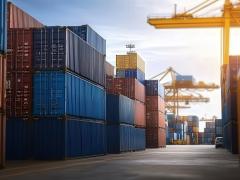
In a repeat of last year, the Ports Regulator of SA has cut the port tariff increase for April 1 proposed by Transnet National Ports Authority (TNPA) by almost two-thirds. TNPA was expecting an 11.9% tariff increase, but the Ports Regulator (PR) granted 4.49%. “The (TNPA) application was made as a request for approval of the required revenue,” PR CEO Riad Khan told FTW. “The PR has considered the tariff application and has refused the requested 11.91% tariff increase sought by the TNPA for the tariff year 2011/2012. “In considering the TNPA’s tariff application, (it was) concluded that a 4.49% tariff increase was a reasonable increase and therefore appropriate.” Khan added that the regulator was guided by the National Ports Act (NPA) and the Directives, and considered the submissions contained in the application, written and oral comments received in the consultation process and its own information and research. “The application is largely compliant with the Act, Regulations and Directives with some important exceptions,” he said. “Key among these is the total exclusion of the property business and the lack of a transparent system for determining tariffs.” Also where the application falls foul of the regulatory framework is that it requires that the application should set out the manner in which the tariffs have been calculated and the model used for determining them. “In the application and subsequently in their roadshow presentation, the TNPA indicated that the tariffs in the tariff book were determined by a range of factors and there was no formula, of general application or otherwise, that explained the tariff differentials,” said Khan. “In the absence of a clearly articulated model the regulator’s decision is therefore restricted to approving an overall increase with general application across all tariffs.” Another directive requires that all operating costs, expenses and revenues incurred or generated from a port service or port facility, as well as the value of the capital stock related to such services or facilities are to be declared in the application. “The TNPA did not give a breakdown per service and per facility in their application,” Khan added. “All future applications must articulate the capital expenditure programme in a more detailed manner, and must include the views and determinations of the port consultative committee (PCC) and the national port consultative committee (NPCC), when they are operational.” Yet again there is a directive that requires that the amounts to be invested and the revenues that are to be utilised in port development, safety, security and environmental protection must be provided – and an explanation of the manner in which the tariffs will affect the cost of doing business in the ports. Khan’s comment was brief. “The TNPA application indicates that revenue is not calculated in that manner and therefore cannot comply,” he said. Also looking at fairness, he pointed out that no explanation was furnished for differential tariffs for different commodities using the same handling classification – other than that “a range of factors” was used in the tariff determinations for individual items. “This is relevant to comments on a consistent methodology,” Khan said. “The TNPA has indicated that its tariff review project will correct historical inconsistencies – but the details thereof are not available as yet.” The TNPA application also failed to show that the port infrastructure owner had avoided crosssubsidisation, save where in the public interest. “The low level of information detail with respect to services or facilities pricing and cost relationships etc, makes it difficult, if not impossible, to determine where and in which direction subsidisation takes place – or if it does not,” said Khan. He also highlighted a failure in clarifying whether the authority was promoting access to ports and conducting efficient and effective management and operation of ports.
Proposed port tariff hikes slashed
Comments | 0
© Now Media. This content is protected by copyright and may not be adapted or republished. If you would like to discuss cooperation opportunities, please contact: editor@freightnews.co.za.