A revamp of the power
system for reefer containers
at the Tzaneen Citrus
Station will ratchet up
the use of rail for the
movement of citrus to the
ports of Durban and Cape
Town.
The revamp, which
forms part of a broader
infrastructure upgrade
project launched by
Transnet Freight Rail
(TFR) in conjunction with
the 4PL Group, is expected
to be completed well before
the new citrus season kicks
in next year.
“We expect to transport
1 500 containers of
citrus fruit for export
from Tzaneen to Durban
and Cape Town for the
2016 season, which has
necessitated this upgrade,”
said project leader for the
Rail Transport Working
Group (RTWG) and
operational manager
for 4PL.COM logistics,
Richard van Tonder.
He told FTW that TFR
had allocated ten extra
carriages on the routes,
bringing the total number
of carriages to 48 per daily
trip for next year’s citrus
season (May to September).
“The rail operator is
also in the process of
constructing three entirely
new 48-carriage unit trains
that are expected to be
operational by mid-2016,”
said Van Tonder.
The RTWG has made
headway in its objective
of promoting the use of
rail for fruit exports, with
Van Tonder noting that
in 2011 fewer than 300
containers of fruit were
transported to the ports
by rail (from Tzaneen).
“In the 2015 season, about
900 containers were
transported by rail,” he
said.
He ascribed this
success to strong industry
collaboration. “Both
Transnet Port Terminals
and TFR have been
proactive in providing the
resources to ensure the
ongoing success of this
project.”
Van Tonder further
pointed out that since
the project had been
moved to the Fruit South
Africa (FSA) portfolio,
the initiative had gained
momentum. And it’s not
just citrus that is joining
the fray.
According to Mitchell
Brooke, logistics
development manager
for the Citrus Growers’
Association (CGA) and
the FSA representative on
the RTWG, up to 12 000
reefer containers could
be transported on rail
carrying citrus, avocados
and grapes.
“Shipments of grapes
from Kakamas in the
northern
Cape are
set to start
railing in
containers
to Cape
Town this
week for the
first time in
five years,”
Brooke told
FTW.
He said
that rail
transport
was cheaper
than road
and that there was a much
lower risk of damage to the
product as handling for rail
transport was considerably
reduced.
“Transporting the fruit
to port in bulk by rail
allows fruit exporters
to pack the fruit into
refrigerated containers
directly at the production
source. This also negates
the need to transport
the individual pallets
to the port by truck for
containerisation in the
port,” said Brooke.
According to him, the
pallets of fruit that are
packed into containers
at the
production
region are
handled six
times from
pack house
to container,
while
individual
pallets
transported
to port in
trucks can
be handled
up to 18
times.
“The extra
handling is costly and
potentially damaging to
the fruit in the cartons.
Packing containers in
the port can take several
days and can delay the
departure of fruit while
containers packed and
railed from production
regions often reach the
marketplace up to ten
days earlier than fruit
containerised in port,”
said Brooke.
INSERT & CAPTION
Shipments of grapes
from Kakamas in the
northern Cape are
set to start railing in
containers to Cape
Town this week.
– Mitchell Brooke
CAPTION
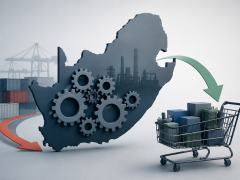
The Tzaneen Citrus Project in Limpopo is making headway in
its move to rail transportation.
Power system upgrade will fast-track citrus rail volumes
Comments | 0
© Now Media. This content is protected by copyright and may not be adapted or republished. If you would like to discuss cooperation opportunities, please contact: editor@freightnews.co.za.