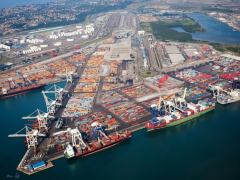
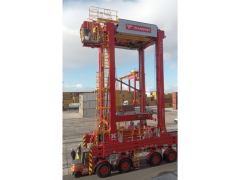
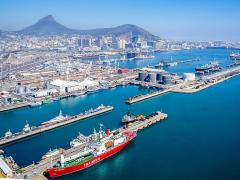
THE RELATIONSHIP between ports and IDZs is not unlike that of a bridegroom (the ports) waiting patiently, although it should be said not anxiously, at the altar for the bride to arrive. Meanwhile the father of the bride (the government) has sent his best limousine but there’s no sign of a bride ready for the trip to the church. The wedding invitation meanwhile has promised big things to come from the union, and four IDZs at East London, Coega, Johannesburg (now OR Tambo) airport and Richards Bay are waiting at the reception. Of the four the two Eastern Cape zones seem the most likely to be consummated. The Coega project hardly needs introduction and has seen considerable expenditure while the East London IDZ on the West Bank has quietly gone about building an impressive infrastructure. But other than that there’s little to show for the investment… just some large buildings and a number of investors, so we are told, but not much by way of increased traffic in or out of the port. The ports were after all supposed to be one of the main beneficiaries, which is why the IDZs were placed where they are. But as far as East London is concerned there’s been no significant increase in harbour traffic and if that’s any indication then the IDZ process is simply not working. Even the bride’s father seems to have his doubts – government declined to spend anything meaningful on port development plans for East London, telling Buffalo City in effect to ‘go it alone’. Over at Coega, the port remains a work in progress where there doesn’t appear to be any hurry. With all the talk nowadays about Ngqura as a transhipment hub for containers, it looks like the groom may have to remain patient a while longer. This is despite ‘Dad’ having thrown lots of money and effort into building the industrial zone and the harbour. And now even more will be spent doubling the container terminal while expressing fervent confidence that investors will come and make the project proud. But that has little to do with the IDZ. A transhipment hub for one or two container lines will not determine the success or otherwise of the IDZ. At Richards Bay meanwhile we are told the ferrochrome smelter built by Tata was an investment in the region’s IDZ which, according to the former mayor of uMhlatuze (Empangeni and Richards Bay), had already attracted in excess of R4 billion, including the R650m Tata smelter and a massive R2.5 billion pulp plant. But the latter project requires a joint venture (another marriage?) between Scandinavia’s Rottneros and NCT Forestry and only afterwards will a plant to produce 300 000 tonnes of wood pulp a year be constructed. To date this project, like so many others involving IDZs, remains secured only by a letter of intent and remains subject to feasibility studies. A decision is pending early in 2008, we are told, although the recent strengthening of the rand could now become an adverse factor. What does this mean for the ports? Remaining with our analogy, the bridegroom by now has other things on his mind, thanks to massive investments in the ports and a sound South African economy that is keeping the ships coming and going. But as for the IDZs, commentators who warned several years ago that the IDZs were destined to become white elephants if they did not attract largescale investment (from outside) may be preparing to remind us that they were right all along.
Ports waiting to reap the benefits of IDZs
Comments | 0
© Now Media. This content is protected by copyright and may not be adapted or republished. If you would like to discuss cooperation opportunities, please contact: editor@freightnews.co.za.