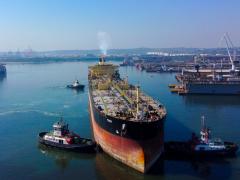
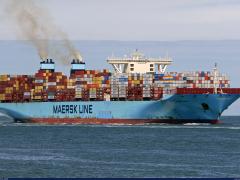
Any fear of the dreaded Ebola virus disease (EVD) entering this country by ship can be allayed, according to Debbie Naidoo, Durban manager of the Port Health Authority. And that horrifying disease, with its estimated up-to-90% mortality rate, has been spreading like wildfire across Guinea, Liberia, Nigeria and Sierra Leone. The World Bank has recognised the problem, and has just launched an emergency fund of US$200 million (the equivalent of just over R2.1bn) intended to fight this spread. But pouring money into the problem is not likely to have much short-term effect on the prevalence of EVD, and this country has had to ensure that its defences are ready. And this has already happened. Since this latest outbreak of EVD – the largest in history – the health department, in conjunction with the National Institute for Communicable Diseases, has issued an alert to officials at the country’s ports of entry. And this includes all the country’s sea ports, said Naidoo. But the good news is that the standard health procedures for visiting ships adequately cover protection against EVD along with all other highly communicable diseases, she told FTW. “In terms of our mandate under the international health regulations, all vessels must communicate with us 48 hours before their arrival,” she said. “And they can’t enter harbour without getting clearance from that port’s health authorities.” The information that must be communicated by each ship includes the health status of the crew and any crew changes, and the vessel’s ports of call in the preceding 30 days. And, following this Ebola outbreak, the Port Health Authorities now require that the vessels send their ports of call lists together with Free Pratique applications. Pratique is the licence given to a ship to enter port, on assurance from the captain that she is free from contagious disease. The clearance granted is commonly referred to as Free Pratique. “Each of us needs to ensure, with immediate effect, that Port Health receives these ports of call lists for every vessel to avoid delays,” said Naidoo. And, should there be any suspicion about any vessel and its crew (or perishable cargo) possibly having been exposed to this communicable disease, she added, that vessel will be immediately placed under quarantine. This is a ‘state of enforced isolation’ used to restrict the movement of persons on the vessel, and of those allowed to board it. “And, if any health staff have to board a vessel placed in quarantine,” said Naidoo, “they would only do so wearing specialised protective clothing.” Such a vessel would remain under these quarantine conditions until a suitable incubation period (in the case of EVD, 1 to 21 days) had passed, and the ship could be declared clear of the disease. “All vessels calling at SA ports,” said Naidoo, “have to comply with all these rulings from the SA department of health and the international health authorities. “If they don’t, they could be faced with fines running into millions.” And Peter Besnard, CEO of the SA Association of Ship Operators and Agents (Saasoa), fully supported the Port Health regulations and informed FTW that he had distributed the authority’s request for assistance to all the member lines and ships’ agents.
Ports on alert over Ebola virus
Comments | 0
© Now Media. This content is protected by copyright and may not be adapted or republished. If you would like to discuss cooperation opportunities, please contact: editor@freightnews.co.za.