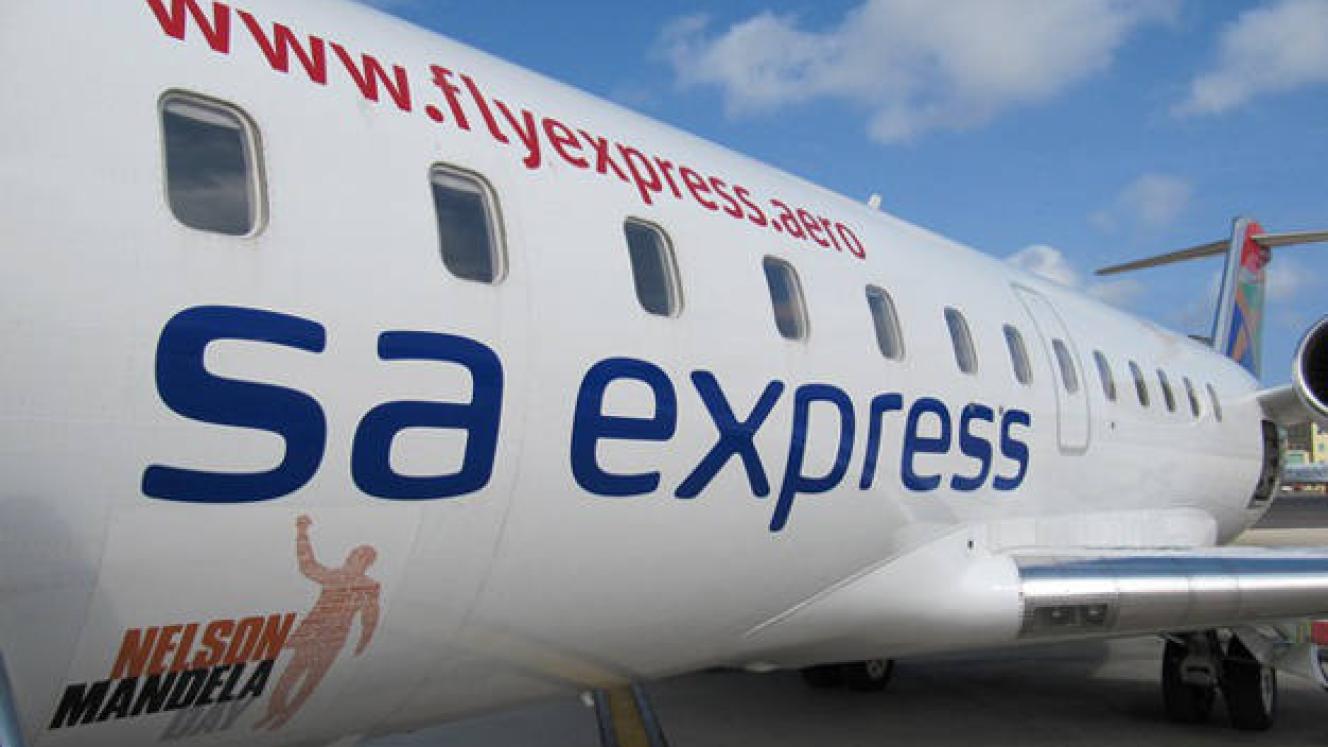
Lack of leadership capacity and poor governance due to lack of focus over the years has led to a number of procurement shortfalls and poor performance culture at the embattled regional airline South African Express, Parliament's portfolio committee on public enterprises heard today.
“Because of the poor governance, there were a number of procurement shortfalls and poor performance culture in the organisation and we have also to be honest that we actually have found that there has been malfeasance and some level of corruption within the system,” SA Express chief executive Siza Mzimela said.
Mzimela briefed the committee on the organisation’s turnaround strategy. She said that up until 2010, SA Express had actually been considered the fastest-growing domestic and regional passenger and cargo carrier on the continent and at that point, the airline was already operating 23 aircraft and was profitable.
“And we make this point because we do obviously find ourselves in a totally different position today. We want to deal with that because when we talk about some of the problems that we faced, I talked about the fact we had 23 aircraft that were in full operation in 2010 but prior to our suspension, we were down to a fleet of 22 aircraft," Mzimela said.
"We were only operating 13 of those aircraft and were trying to cover our schedule by bringing in chartered aircraft which itself created a problem within our system.
“We were operating 17 domestic routes, six regional routes, but of those 17 domestic routes and six regional routes, only three domestic routes and two regional routes were profitable at that time. And our on-time performance, which actually talks to our customers and the reliability of the organisation, was at its lowest, at 65 percent,” she said.
She told members of Parliament (MPs) that from the aircraft perspective, because of the poor reliability of the aircraft, it led to an unreliable schedule which actually led to the company, prior to suspension, already operating the lowest on-time performance in the system compared to other competitors in the environment.
She further said that there were a number of acting management positions within the organisation and that staff numbers were on the high cycle for the size of the current operation.
“So we remained with the number of staff to cater for a 22-aircraft operation even though we were operating only 13 aircraft prior to grounding, so that became a challenge," Mzimela said.
"Today we find ourselves sitting with the weak balance sheet, we have long outstanding debts in the system, and a number of our frozen credit lines have been frozen by our suppliers. So this is what we have had to actually work quite hard on for the past few weeks to try and unlock some of those credit lines. We do have a liquidity challenge and as I already mentioned we also have a very high fixed cost structure as opposed to overall cost structure.”