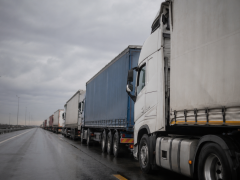
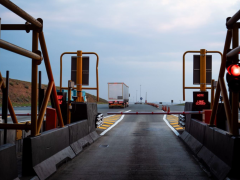
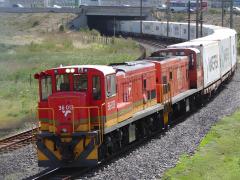
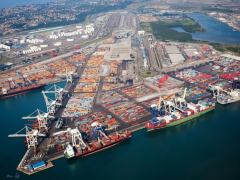
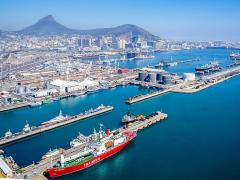
Holistic look at Walvis Bay, Durban and PE JOY ORLEK IN SOUTH Africa logistics is a cabinet issue, says the Automotive Industry Development Centre’s Barlow Manilal. “The cost of logistics is way too high. Transport costs are estimated to be 50% of the cost of logistics which is excessive in relation to global norms. “Our drive to reduce those costs involves a holistic look at issues like the Sars processes and corridors, which has been the focus of a recent initiative.” The results of a pilot project undertaken in conjunction with the Walvis Bay Corridor Group are imminent and will provide empirical evidence of the strategic advantages of the route. “If you look at the geographic location of Walvis Bay it offers a 4-day reduction in your transit time from Europe,” says Manilal, “and keeping four days less stock in your supply chain translates into significant savings.” The major challenge on the route is however the absence of a direct rail link. The pilot study involved the movement of containers intermodally from a common location in Pretoria, using Walvis Bay, Durban and Port Elizabeth as points of export. In the case of Walvis Bay, cargo was roadhauled to the port. “We used two suppliers based in Pretoria and the containers were shipped out simultaneously through the various ports to Antwerp where they arrived on June 28. “Each was equipped with satellite tracking so that a full report of the total process of costs over the route will be examined.” Walvis Bay has always claimed to offer the shortest route to Europe but no-one has ever put it to the test, says Manilal. “We’ll now have empirical information, not just based on perception.” With this evidence in hand, approaches can then be made to government to consider the infrastructure shortfalls and how these can be addressed. “First prize would obviously be a rail link to Walvis Bay, but in view of the costs of putting down 800 kms of rail that’s likely to be a long-term programme.” The AIDC plays the role of middleman, in Manilal’s view. “We’re looking at industry on one hand but as a government-funded agency we also understand where government is coming from.”
Pilot project compares corridor efficiencies
Comments | 0
© Now Media. This content is protected by copyright and may not be adapted or republished. If you would like to discuss cooperation opportunities, please contact: editor@freightnews.co.za.