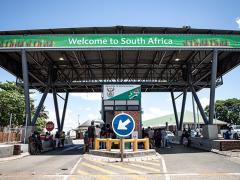
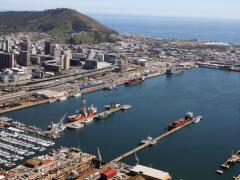
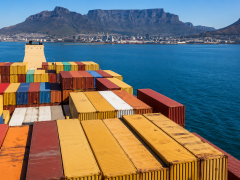
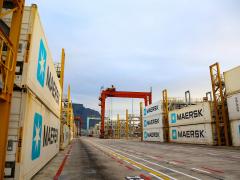
Public-private partnerships (PPPs) are providing mining companies and traders with a new gateway through the ports of Walvis Bay and Lüderitz, according to Edward Shivute, acting chief executive officer of the Walvis Bay Corridor Group (WBCG). “Sustained regional growth in mine-related cargo is increasing demand for efficient, reliable transport and logistics services across regional corridors,” he told Freight News. There is a shift towards higher-value and strategic minerals driven by the global energy transition. “New and expanding mining ventures across the region are driving demand across the entire logistics value chain, from the movement of construction materials and machinery to the export of processed or semi- processed minerals. “These developments are reinforcing the importance of integrated, reliable corridor solutions connecting mine pit to port,” he adds. “To strengthen its corridors, the WBCG is focused on strengthening strategic partnerships with the transport and logistics industry stakeholders, government agencies, and other relevant key partners to strengthen corridor efficiency, safety and reliability.” The result is encouraging growth trends in diversified commodities and emerging markets, he says. “A key milestone during the year was the introduction of zinc exports from the Democratic Republic of Congo (DRC) via the Walvis Bay-Ndola- Lubumbashi Development Corridor (WBNLDC) through the Port of Walvis Bay. “In addition, new clients, including chemical traders and mining equipment manufacturers, were successfully onboarded. “These developments reflect growing market confidence in Namibia’s corridors and the continued diversification of both imports and exports. “Operationally, a key development has been on the Trans Kalahari Corridor (TKC), linking Botswana’s copper-producing mines to the Port of Walvis Bay.” There has been investment in handling equipment to support the increased volumes. “We work closely with transporters handling bulk copper using modernised equipment such as shore cranes paired with a patented closed skip system. “This solution enables faster loading, zero spillage, safer quayside operations, and quicker vessel turnaround times, allowing Namibian ports to handle larger export volumes more efficiently,” he says. On the road, cargo is moving faster with the opening of One- Stop Border Post operations at the Trans Kalahari and Mamuno border posts. “Furthermore, the Oshikango-Santa Clara border post has been launched as a 24-hour operational crossing, significantly enhancing trade facilitation along the Trans- Cunene Corridor, which links the Port of Walvis Bay to southern Angola.” More manganese will be able to move through the port of Lüderitz with the development of the Angra Point Deepwater Port. Shivute adds that Namibia’s mining industry is gaining momentum, particularly in uranium and lithium. “To sustain the growth, as the transport and logistics sector evolves, the focus is on infrastructure development and investment into intermodal transport, especially in terms of strengthening and improving our rail linkages and connectivity with neighbouring countries.” ER
Partnerships unlock export markets
Comments | 0
© Now Media. This content is protected by copyright and may not be adapted or republished. If you would like to discuss cooperation opportunities, please contact: editor@freightnews.co.za.