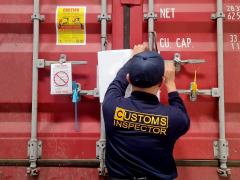
WITH PART 108 security regulations set to come into effect in January 2009, all the players in the airfreight industry need to decide how they are going to handle it, says Brian Hingley of Transit. “We want to add value for our clients and have therefore registered and are implementing all the regulations so that our customers need do little but apply their common sense,” said Hingley. Part 108 is being implemented by civil aviation internationally as a preventative measure to ensure that all cargo is safe before it gets handed over to airlines. The aim is for airlines to do 10% of the screening of cargo – the rest is up to customers, couriers and the like. Transit has been preparing for the past two years to comply with the regulations. Obviously a vast amount of training needs to be done and all staff will attend courses on how to fly dangerous goods, says Hingley. They need to be acquainted with the manuals that set out the specifics on how these goods should be moved. On the technical side, Transit has decided on X-ray machines as the way to go. “They may be more expensive but they are the most time-effective which is what our customers require when utilising airfreight. Security and time is like oil and water – to be secure requires time but this is a very time-sensitive industry so you need to find a balance,” notes Hingley. Of course Part 108 puts pressure on pricing as it requires an additional process which adds to the cost of flying. But this is where Transit can add value by consolidating and packaging cargo so that the airlines do not have to deal with hundreds of different customers. The combined spend from Transit’s clients allows the company to pass savings back to them as the airline now only has one waybill to handle. “Transit buys space with airlines based on tonnage and sells it to the industry; there is a tariff and a sliding scale so the more Transit sells the less they pay. Airlines also offer a container incentive with specific pivots so it requires a certain weight to reach the pivot,” Hingley explains.
Part 108 adds cost pressures
Comments | 0
© Now Media. This content is protected by copyright and may not be adapted or republished. If you would like to discuss cooperation opportunities, please contact: editor@freightnews.co.za.