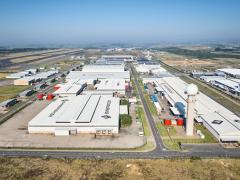
The rail service offered by Transnet Freight Rail on the busy Natcor corridor between Gauteng and Durban over the past year has generally been of a high standard, says Christine Pater, general manager of Bridge Intermodal, a division of the Bridge Shipping Group. Rail is integral to Bridge’s intermodal service offering, and Pater believes that the company’s value proposition is enhanced by its full supply chain capability encompassing warehousing, rail and road transport. “We have two private sidings at our City Deep facilities, which are an added benefit, and Bridge Intermodal Durban has the use of a rail siding situated in its facilities in Bayhead which is able to receive bulk cargo and dispatch export containers to the Port for export shipment. “The export containers which are loaded onto this siding are moved via a shuttle service directly into DCT/Pier 1 for placing into the vessel’s stacks.” The ability to utilise the shuttle service means that a volume throughput of containers can be moved at any given stage, reducing congestion in the depot, she added. And while there are constraints on rail, Pater believes the same applies to road transport. “Rates are driven by marketshare and availability of vehicles at a cost-effective rate. The difference between rail and road is that volume can be moved by rail while road is on a per-vehicle basis and is subject to availability, she said. “Over the past year, with the exception of a few unavoidable deviations caused, for example, by inclement weather conditions, the Bridge Shipping Group has railed large volumes of traffic, said Pater. “Our outlook for this year is to continue increasing rail capacity – but this is largely dependent on the imminent increase in rail rates. “Growing marketshare and increasing road transport opportunities locally within our Durban division is the focus for 2013,” she said. INSERT ‘Rail growth depends on impact of imminent increase in rail rates.’
Own rail sidings improve value proposition
Comments | 0
© Now Media. This content is protected by copyright and may not be adapted or republished. If you would like to discuss cooperation opportunities, please contact: editor@freightnews.co.za.