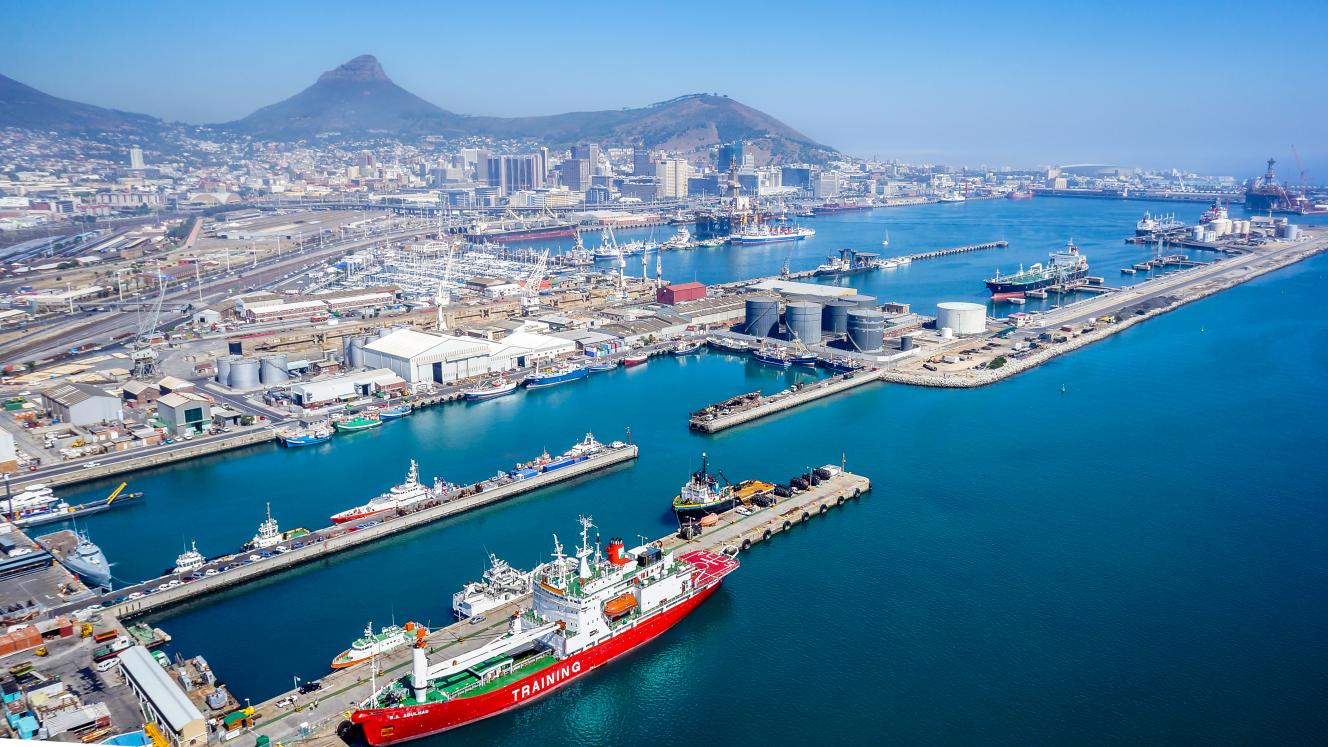
FTW was landed with a right puzzler last week. An anonymous e-mail arrived in our system, hinting at a big story involving the Cape Townbased Fresh Produce Terminal (FPT), but with no background information on this intriguing affair – which seemed to involve some sort of alleged illegal activity(ies), possible contraventions of a government act, and potential major fines. The e-mail read: “It is understood that two major shipping lines have suspended their calls to FPT in Cape Town. “The questions you might consider asking are: * Is FPT an SA Revenue Service (Sars) designated place of entry for ships in terms of (section) s.6 of the Customs & Excise Act? * If not, what potential fines will every ship that has called there since 2004? incur? * Is FPT a “transit shed, container terminal, container depot or state warehouse” for purposes of s.11? * If not, what potential fine will there be for shipowners in respect of every container ever landed there (and how many containers have been landed there)? * Does it have a container depot licence issued by Sars ito (in terms of) s.64A and s.60(1) of the Customs Act? * If so, what is its depot code, and why does code 04 (Cape Town Container Terminal) appear on all Customs documents irrespective of goods landed at FPT? * If it is not licensed, what is the potential fine for FPT per container ever landed/ stored there?” Bearing this in hand, FTW contacted Capespan, the owners of the FPT chain. It is a “sensitive issue”, said Dr Dawie Ferreira, CEO of Capespan Logistics Division, and one he couldn’t discuss in any detail. But, he added, “the summarised version” was that, when Sars went from the old manifest acquittal system (MAS) to the new automated cargo management (ACM) system, it had to re-register all the old entities in the new system – some going back 50 years. “In this,” he added, “FPT was not on the dropdown list as a container terminal – and was redflagged.” The problem, he stressed, was not due to “bad intent”, but rather an “oversight along the way”. What had happened was that the perishable market had moved from the traditional bulk reefer (refrigerated) ships almost exclusively to reefer container transport. “For example,” he told FTW, “all deciduous fruit ex Cape Town is now in containers.” To meet this market need, FPT – with the approval of Transnet – became a multipurpose terminal. “We handle bulk agri-products, like timber,” said Ferreira. “We also have a reefer yard where we cool fruit and stuff reefer containers. Most of this goes round the bay to the CTCT.” With fruit terminals in the ports of Cape Town, Port Elizabeth and Durban, FPT has offered fruit exporters “a customised service for many, many years”, Ferreira added. FPT is currently working with Sars to identify the areas of the business that require registration on the ACM system or additional requirements, according to Ferreira. “We do not foresee any penalties to ships landing containers at FPT premises,” he added. “Any potential penalties levied by Sars associated with our operations would be of an administrative nature and borne by FPT. We are in discussion with Sars to have the status quo remain until all administrative issues have been clarified and updated.” Ferreira also insisted that it was too soon for him to provide a detailed response to all the questions posed in the anonymous e-mail. “We will, however, endeavour to provide you with a detailed response following finalisation of our discussions with Sars,” he said.
‘Oversight’ prompts questions about FPT’s status
Comments | 0