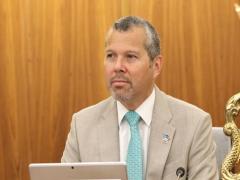
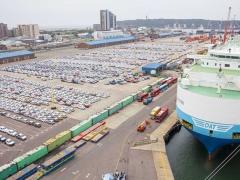
Overcoming cultural barriers in an effort to get everyone to speak the same “shipping language” is possibly one of the biggest challenges when dealing with the Far East, according to Lars Schoennemann, managing director of BBC Chartering Singapore. “As we continue to get more educated about the market needs and conduct, local cargo owners get more accustomed to ‘our’ shipping language and our conduct and us to them,” he told FTW recently. Also challenging is the economic growth of the region that has led to the local shipping industry growing, but with the influx of capacity also comes pressure, “With the growth in the local shipping market we have seen a lot of Asian capacity flooding the market bringing it under pressure. This is in addition to the competition our market faces from both dry bulk tonnage and pure container carriers.” Then there are also local habits that are leading to challenging business conduct; foremost the fixing of cargo without honouring the contract, he says. “There is a lot of risk involved when it comes to actual volumes and freight payments due.” But the real challenge, said Schoennemann lay in turning the challenges into opportunities. “It is about finding the best solution even when it seems impossible. It comes down to confronting the situation, doing one’s homework and finding solutions to the very problems being faced.” BBC first commenced operations in 1997 with a fleet of ten multipurpose vessels. From its headquarters in Leer, Germany, the company currently markets more than 145 vessels, representing the single largest heavy lift fleet in the market, with lifting capacities reaching up to 800mt. “The Far East represents a huge market, especially with China being the major engine driving the world economy. There are plenty of shippers producing increasing amounts of cargo that need to be shipped and at the same time such companies also create shipping demand on the supply side needing (raw) materials to fuel their operations,” said Schoennemann. With a healthy demand there is sufficient amount of cargo in the market at present with more likely to come in the near future. “Despite the competing capacity on the supply side, increasingly from Chinese and Korean carriers, we can identify a positive trend regarding the rate development due to the promising development of cargo volumes,” he said. Having recently introduced a Trans-Pacific liner service calling loading ports in Shanghai, Masan, Kobe, and Yokohama for discharge in Long Beach (West Coast), Charleston and Houston, it is a market in which the company truly believes. “This step enables us now to say that with this new link between Asia and the US our liner offering turns into a truly world-embracing service.” Another important project for the company, said Schoennemann, was the operation of BBC SkySails, a vessel that is part of a practical pilot project that follows the goal to provide zero emission propulsion support. “A giant towing kite is mounted on a launching and recovery system located at the forecastle of the BBC SkySails. With that we support this innovative concept and help to gather relevant data and experiences that allow us to improve such a system, giving other vessel operators the opportunity to investigate and employ such energy-saving, zeroemission propulsion technology successfully.”
Overcoming cultural barriers a big challenge
Comments | 0