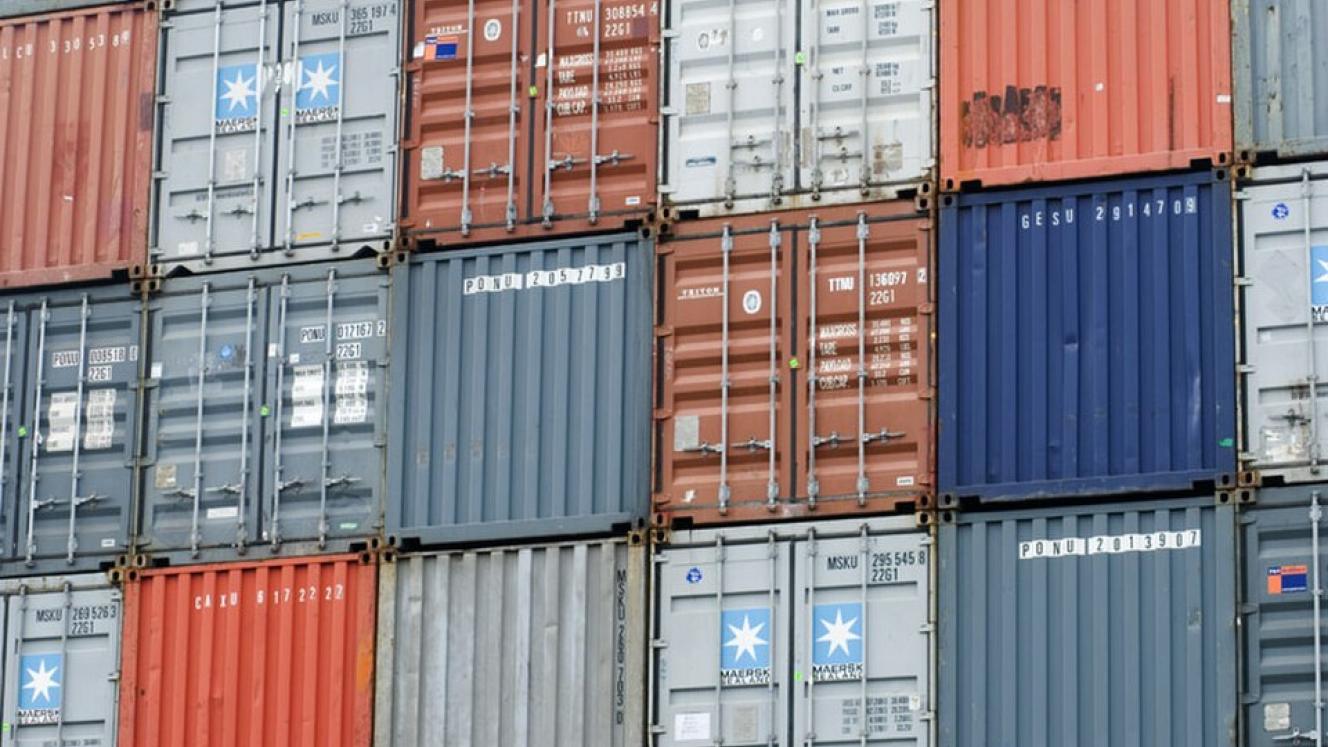
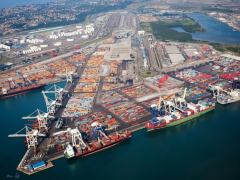
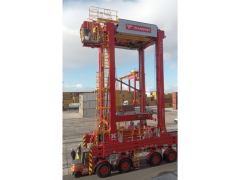
In the interests of transparency I must admit some bias towards the port of Ngqura. While business editor on the Herald newspaper I broke the story on the plans for the port and the Coega Industrial Development Zone. Our night editor Bobby Cheetham took a bet (a bottle of Ship Sherry) that Nqgura would never see a vessel. A photo of him handing over the sherry with the MSC Catania in the background now stands on a mantle piece above my desk. He was not alone in doubting that Coega would ever see the light of day. The Eastern Cape has allowed investment promises to be broken or lapsed for well over a hundred years, and disbelief is built into the genes of the locals. Transnet’s own ambiguity over the port did not help. According to a recently released document detailing plans for the Eastern Cape ports up to 2042, Ngqura was “originally planned as a bulk port”. It was then adapted for container handling. Most recently it is at the centre of Transnet’s Container Hub Strategy. Currently it is planned that Ngqura will handle container cargoes for the local hinterland, and “be positioned to handle overflow Gauteng cargoes should capacity in Durban be exceeded”. Ngqura is also targeting transhipment cargoes, both for east and west Africa. Those plans could well change if the dig-out port in Durban becomes a reality, with Ngqura reverting to its largely bulk role. The legacy of the original design as a bulk port with limited containers has left the port with a number of constraints. It is frequently wind-bound because the vessels are side-on to the wind, and an extremely strong underwater surge at times rips vessels off their moorings. Despite these constraints, volumes through Ngqura have been growing in the four years since it handled its first commercial cargo on October 4, 2009. Volumes have increased from 78 935 TEUs handled in the 2009/10 financial year to an impressive 408 314 TEUs in 2010/11 and 623 565 TEUs in 20012/2013. The projection for 2013 is almost doubled at 949 837 TEUs. According to the Drewry Maritime Research Report, Ngqura is the fastest growing container terminal in the world based on year-onyear volumes. Transhipments account for almost 65% of the total volumes handled, with imports and exports equally split. These volumes have not, however, translated into growing business in the port city – unlike Walvis Bay or Beira, where the local business community seems to be more connected to the port and the opportunities it opens up. Like my friend and former colleague, it seems that local business – including the logistics industry – has been slow to identify and exploit the opportunities that having direct connections to the world’s major hubs must present. Transnet does not seem to have much confidence that locally generated container volumes will drive the growth of the port. It states that “IDZ-generated projects, none of which has been finalised, collectively indicate a significant role for Ngqura as a bulk port servicing the CDC’s tenants”. These projects include a manganese smelter, PetroSA refinery, LNG power station, and a range of other “smaller but significant operations”. In the meantime, as “part of ongoing investments the terminal is taking delivery of two additional Cranes and 18 Rubber Tyred Gantries in the first half of 2014”. CAPTION The fastest growing container terminal in the world based on year-on-year volumes
Ngqura – the port that can
Comments | 0
© Now Media. This content is protected by copyright and may not be adapted or republished. If you would like to discuss cooperation opportunities, please contact: editor@freightnews.co.za.