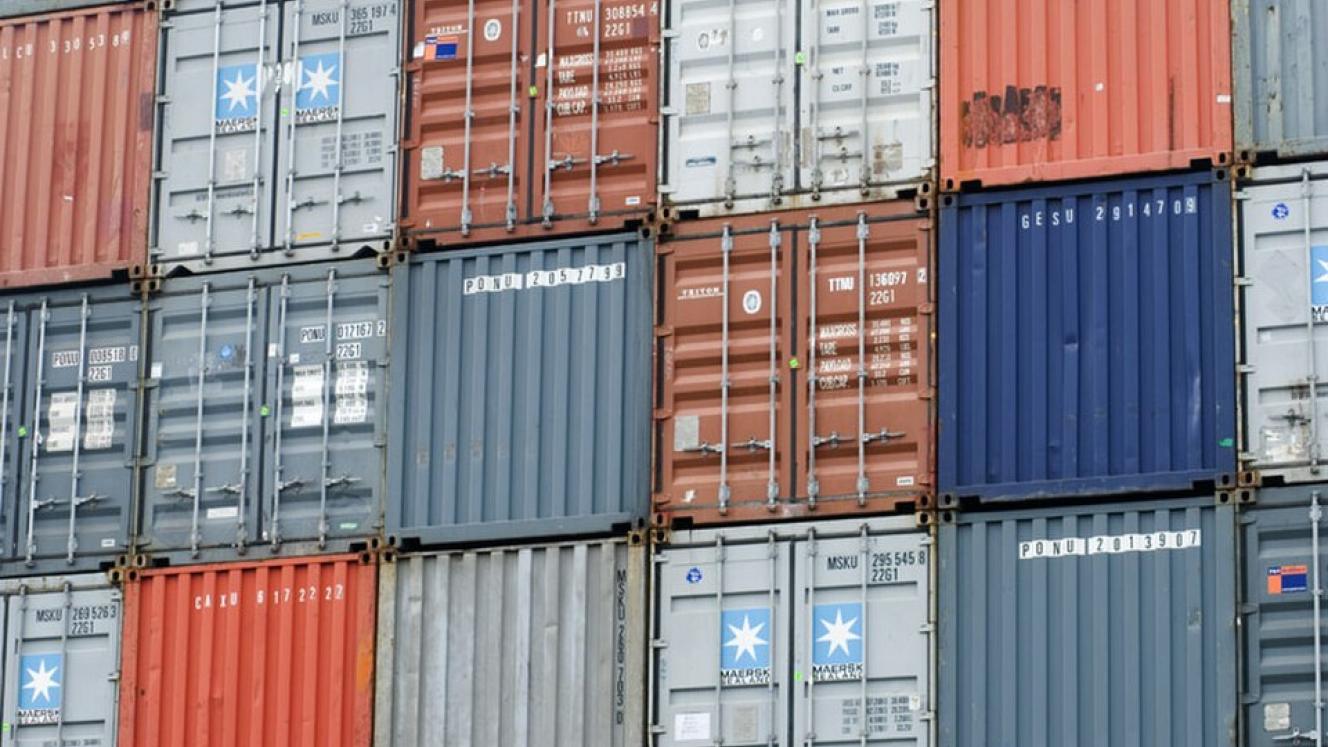
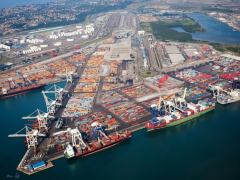
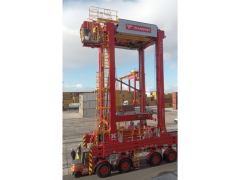
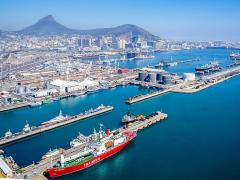
TERRY HUTSON From page 1 TENDERS CALLED for last week reveal that Durban’s new container terminal at Pier 1 will be equipped with rubber tyred gantry cranes, a radical departure from previous practice. Until now South Africa’s three container terminals have remained firmly in the mould of straddle carrier operation and were only recently re-equipped with new machines at Durban and Cape Town. The advertisement, carried in several newspapers, calls for the supply of 12 rubber tyred gantry cranes for a second container terminal being developed on Pier 1. The decision to go for RTGs instead of a straddle carrier operation, as in use at the Durban Container Terminal (DCT) and other South African ports, indicates a new and welcome approach to increasing capacity and productivity. For environmental and other reasons port planners and engineers can no longer continue filling in water areas in Durban Bay. Even Cape Town’s planned container terminal expansion seawards is under environmental pressure. All this leads to increasing acceptance that better use has to be made of existing space, with one solution, for Durban at least, so straight-forward that it cries out for recognition - vertical expansion. Durban’s fleet of about 90 straddle carriers, including 60 new machines, have stood in the way of this, as they are restricted to stacking boxes two-high compared with up to seven high at other leading ports that use RTGs. Pier 1 will provide approximately 1 kilometre of quayside and berthing area for a designated capacity of about 600 000 TEUs and seems an ideal choice for a private/public partnership to provide healthy competition for DCT.
New thinking on Durban cranes offers vertical expansion solution
Comments | 0
© Now Media. This content is protected by copyright and may not be adapted or republished. If you would like to discuss cooperation opportunities, please contact: editor@freightnews.co.za.