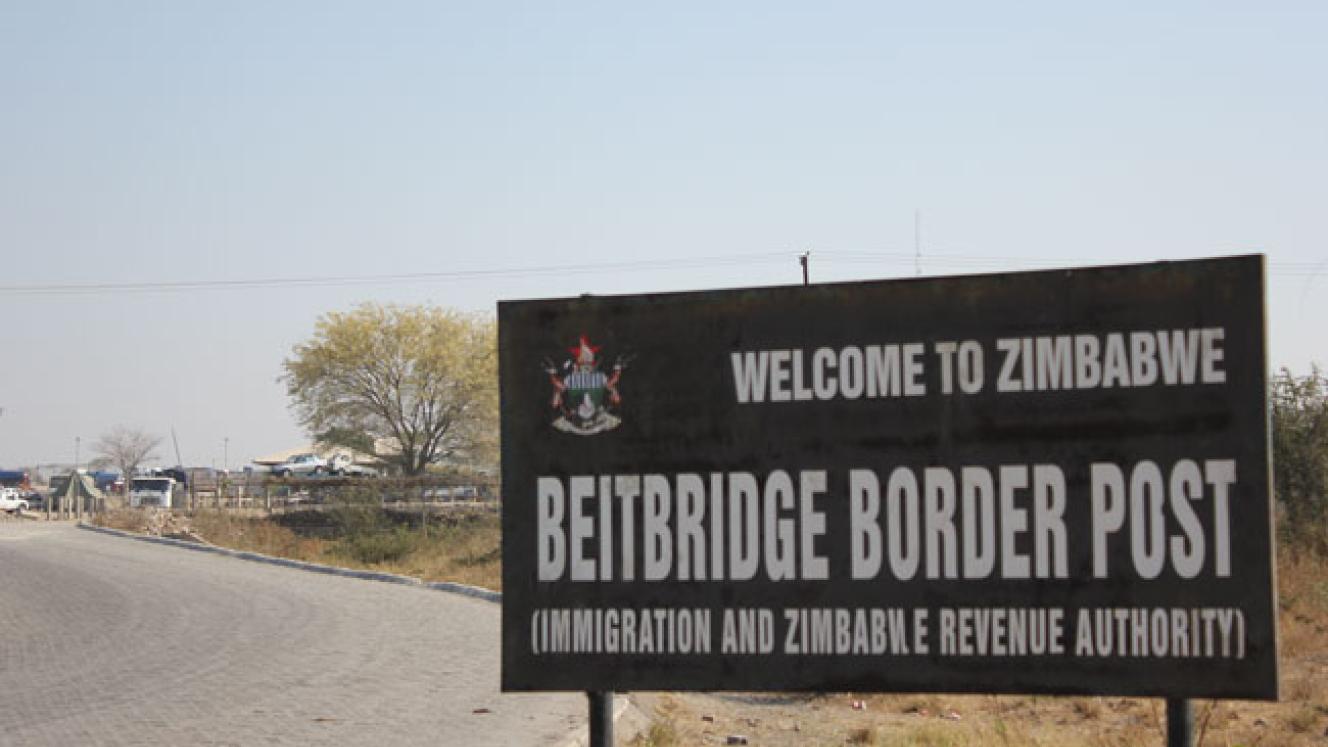
Driver behaviour has been identified as one of the main contributors to standing time (delays) at the Beitbridge border post in a new case study released by trade consultancy Tutwa Consulting.
The case study was based on the findings of a team of four researchers who recently travelled to the border post for four days, interviewing a range of stakeholders that included government officials, truck drivers, clearing agents and cross-border traders.
“Drivers interviewed complained of poor working conditions, including a lack of downtime between trips, and said they preferred to spend more time at the borders to rest even once clearance was completed,” said Anna Ngarachu, a researcher for Tutwa Consulting. “Some drivers would commute home to their families in nearby towns or as far as Harare, awaiting completion of their clearance documents.”
She said that on average, this driver behaviour would add a day or two to total standing time - and since it was a result of poor working conditions, drivers had little incentive to change their behaviour.
According to truck drivers at the border post, the average clearance time for a truck whose documents were in order was 48 hours - but this was dependent on the type of cargo being carried.
The case study also found that poor signage and a lack of disaggregated lanes, lack of risk management processes for scanning and inspections - as well as low levels of staffing among customs officials - contributed to border post delays. However, if pre-clearance processes are used this would reduce time at the borders significantly.
Ngarachu noted that inefficiencies at the borders could benefit some firms operating at the borders, such as clearing agencies and service providers.
“This results in a disruptive impact for some stakeholders on trade facilitation measures,” she said. “For example, following the change to 24-hour operations at Beitbridge, clearing agents did not extend their working hours, undermining the impact of the trade facilitation measure.
“Therefore, it is necessary to have a broad engagement with all stakeholders, through public-private interaction, to ensure the tension between trade facilitation measures and stakeholders engaged in border activities is minimised and the measures are not undermined.”
Ngarachu told FTW Online that the report was still under review by its funders but would be completed for publication in around a month’s time. Following this, it would be presented to policymakers in South Africa, Zimbabwe and Zambia as it also includes data relating to the Chirundu border post for transporters on their way to Lusaka from Zimbabwe.
“The full report will be presented to policymakers from these three countries so that they are able to use it in any adjustments to border operations and border redesign,” she said. “We believe that they will take our study into account as while previous studies have taken driver behaviour into consideration, in our findings we didn’t come across studies where driver behaviour and conditions were of major focus, and we wanted to delve deeper into these softer informal issues in our study and policymakers will now be able to factor this into their operations and cost pricing model.”
She noted that Tutwa had already had a few stakeholder engagements where officials had shown a lot of interest in the report. She said that as standing times at borders had been shown to be the largest contributor to transport costs in southern Africa, unpacking the contributing dynamics was critical for the facilitation of trade in the region.
Some of the recommendations made by the case study include the formation of a regional federation of commercial cross-border drivers, standardisation of training and qualifications for customs brokers in the SADC region, construction of low-cost overnight accommodation as well as the introduction of a simplified trade regime for cross-border traders.