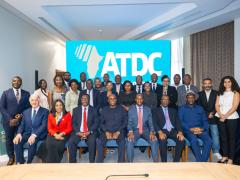
A novel European solution to an old problem that has dogged rail freight for decades made a significant impact at a recent technical fact-finding workshop hosted by the South African Heavy Haul Association (SAHHA).
Generally speaking gauge-width differences had been regarded as one of the biggest barriers to seamless over-border railways systems, explained Brian Monakali who heads up the association. The seemingly unassailable problem of trains capable of using different types of track have dominated talk shops on the issue, often derailing discussions striving to solve the problem of intermodalism.
He said that “the difference between standard and Cape gauge” – the one being 1 435mm and the other 1067mm in width – “have resulted in questions about who must change.” In many instances the question of standardising gauges across African regions has invariably resulted in infrastructural deadlocking – particularly because of the immense capital outlay that such an endeavour will require.
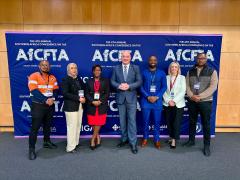
At the Africa Rail Expo held in Sandton in June, freight rail experts from across the continent mostly agreed that gauge standardisation was simply not financially feasible.
“But we’ve been having the wrong conversation all along,” Monakali said. “Europe has many different gauges but the trains are running seamlessly from one track to another, crossing borders without much or any delay thanks to the application of technology that has brought about a stoppage-free rail network.” Mainly it revolves around adding a third interchangeable track that shifts according to the bogie specifications of different trains.
He added that in some cases bogie adaptability or width-shifting wheels had been added to the equation. The SAHHA conference in Boksburg touched on several topics impacting the heavy haul industry but the presentation by French rail freight adviser Eric Guenther on “different track gauge systems” was the one that really stood out, according to Monakali.
“We’ve been talking about gauge standardisation and the resultant infrastructural spend for so long that we’ve been blind to the possibility of using technology to continuously run trains across connection points.” It is exactly the kind of revelation that delegates attending the conference were hoping to find, he said.
Speaking to FTW on the eve of boarding a plane for Sweden to debrief the International Heavy Haul Association that Monakali chairs in addition to SAHHA, he said: “The technical workshop has given us some sense of what it will take to meet certain challenges head-on. It will enable us to take African thinking and international solutions to meet challenges facing heavy haul.”
We have been having the wrong conversation all along. – Brian Monakali