Global container
supplies remain
constrained
and
prices buoyant
due to demand
and recent
environmental
regulatory
changes that have
slowed down the
manufacture of new
containers in China in
recent months.
Speedspace director Barron
Charsley said demand for
containers had risen this year
and leasing companies
were less likely to sell
off used containers
which stymied
the availability
of second-hand
containers on the
market.
“Container
utilisation by
leasing companies
and the shipping lines
is much higher
than it was
last year and freight rates
and leasing rates are going
up on the back of that,” said
Charsley.
Almar Container Group
CEO Francois du Plessis said
the initial tightening of supply
seen in October last year had
now been further exacerbated
by a move
by the China
Container
Industry
Association
(CCIA) to
comply with the
government’s
new
environmental
regulations to
reduce VOC
emissions by
using waterborne paint for
container production. The
association represents the four
main container manufacturers
– CIMC, Singamas, CXIC and
Dong Fang International –
which along with their paint
suppliers now face tough
penalties if any containers are
painted using solvent borne
paints. This after several
incremental deadlines, the
last of which was April 1, 2017
According to the Container
Owners’ Association some
95% of the world’s container
production takes place in
China and the
industry is a
substantial
contributor to
air pollution,
which is why
joint action
was necessary.
The major
firms agreed
to the move
to ensure fair
competition
because the cost of waterborne
paint will drive up container
prices.
Du Plessis said earlier
supply constraints had been
identified as partly due to
the Hanjin bankruptcy, the
Christmas rush and an almost
zero build quantity in 2016
– but additional factors such
as this new regulation could
result in “a longer and more
severe supply crunch than
initially thought”.
“A marginal increase
in trade has resulted in
an increase in demand in
shipping and subsequently
container demand – and
with the poor shipping
performance in 2016, lines
have pushed more reliance on
leasing companies which can
now achieve higher leasing
prices so they are prioritising
leasing instead of sales,” he
said.
“China’s inland and local
trade has been extremely
strong and has driven a 100%
price increase in the last six
months on 40ft HCs. As such,
many containers are being
empty repositioned to China
to attract the better price,” Du
Plessis said.
“SA and India are currently
the cheapest locations in the
world and empty repositions
from SA and India to China
are happening fast.”
Du Plessis said Chinese
manufacturers had reported
that it was extremely costly
to upgrade their factories in
order to accommodate the
waterborne paint process in
production.
“One of the biggest players
in China says it can only
afford to update its bigger
factories, which reduces
capacity so it has a big
impact on the supply of new
containers. And because
new containers are so scarce
shipping lines are utilising
their containers longer – so
used containers are not on
the market as much as they
were,” he said.
Last year shipping lines
were paying 30 US cents
a day to lease a container
and this had risen to 80 US
cents a day, he added, while
the price of a used 40-foot
container had increased
to US$ 2000. However, he
said supply was becoming
“very difficult” and it was
now a question of access to
containers rather than price.
“It is positive for the
industry that there is a
stronger price so people in
the container industry can
get a bit more of a return on
their money than previously
but it creates difficulties
in the reverse because we
have clients coming to us
wanting to get their hands
on containers. We are having
to limit our container sales
to smaller volumes and share
what is going around,” Du
Plessis said.
He expects the shortage
to last until the second to
third quarter of 2017 before
easing up.
“We are paying more than
100% more for containers
than we were five months
ago at the end of 2016
but the majority of that is
market-driven rather than
as a result of the waterborne
paint regulations,” Charsley
added.
DAL Agency managing
director Dave McCallum
said that while the firm’s
principal handled the
container side of the
business he had noticed
that the price of second-hand
containers had “started to
run” and sourcing 40-foot
containers had become “a big
issue”.
SA Association of Ship
Operators and Agents CEO,
Peter Besnard, said an
industry stakeholder had
reported that there was a
shortage of 20-foot containers
in Johannesburg and that
businesses were operating
“lean and mean” while others
who were using 40-foot and
20-foot containers were
coping under the current
trading conditions.
INSERT
Sourcing 40-foot
containers has
become a big issue.
– David McCallum
CAPTION
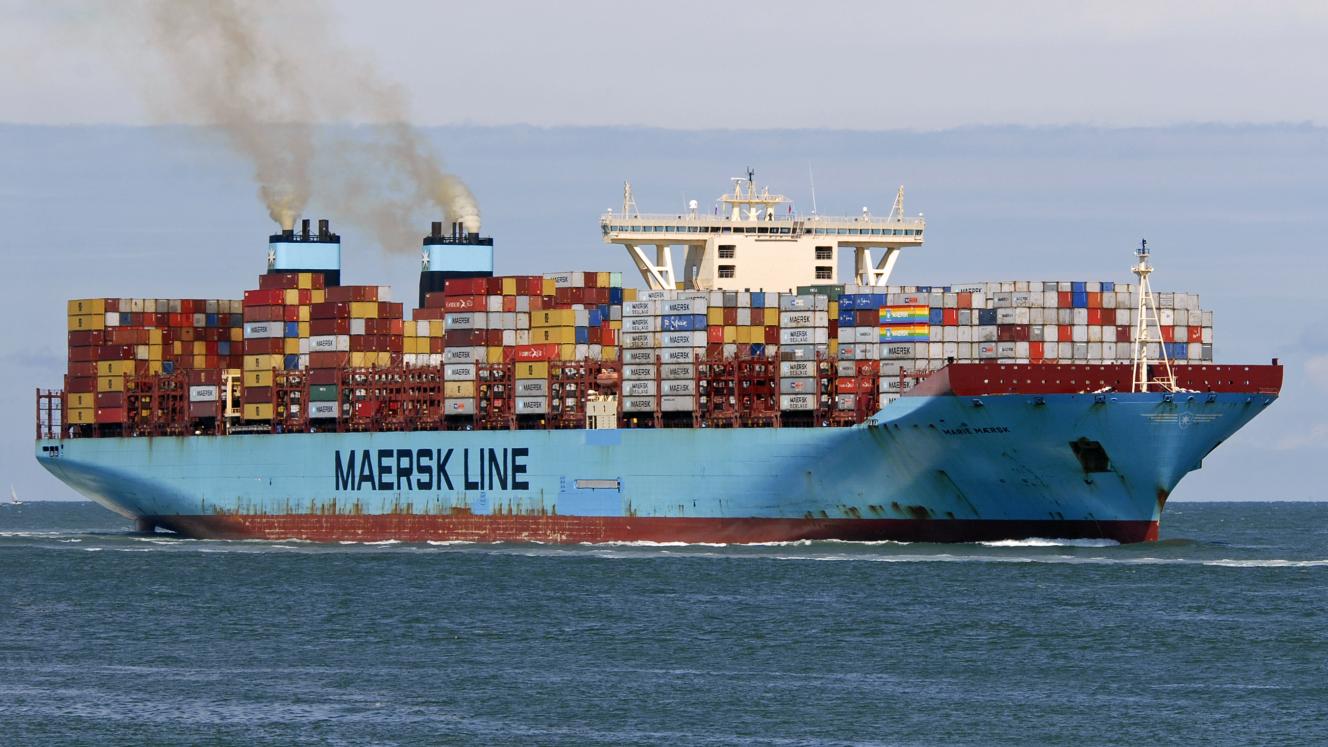
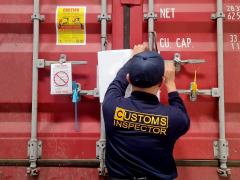
Containers in demand … the tightening of supply has been exacerbated by new environmental
regulations.
New ‘green’ regs put the squeeze on container supplies
Comments | 0
© Now Media. This content is protected by copyright and may not be adapted or republished. If you would like to discuss cooperation opportunities, please contact: editor@freightnews.co.za.